


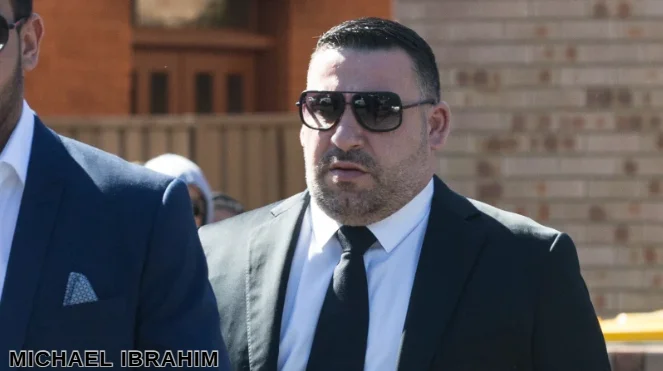
Michael Ibrahim, whose real name is Moustafa Ibrahim, is one of the most infamous Australian criminals who is inseparably connected to the Australian underworld, as he was involved in large-scale smuggling of drugs and tobacco. The true story of crime, violence, and extensive imprisonment that sees Michael, the younger brother of the Kings Cross identity John Ibrahim, move out of the western suburbs of Sydney to a maximum-security cell is considered dramatic, and it still captivates the Australian people.
Who is Michael Ibrahim?
Michael Ibrahim is the fourth brother born around 1979 to a Lebanese immigrant family that arrived in Sydney in the western suburbs in the 1980s. The Ibrahim family, which consisted of four siblings, namely Hassan “Sam,” John, Fadi, and Michael, was brought up in a difficult environment as the family had immigrated to Australia to escape the war in Lebanon in order to have a more improved life.
Michael had also taken a straight route into criminality as compared to his more renowned brother, John, who had established a nightclub business in Kings Cross. In the middle of his twenties, he had already committed the first real crime, and his criminal history would only grow further.
The 2006 Manslaughter of Robin Nassour
The first big conviction of Michael Ibrahim was as a result of a tragic event in January 2006. Robin Nassour, brother of Fat Pizza comedian George Nassour, was stabbed and killed in an underground car park in an apartment complex in Chiswick. The 34-year-old victim and his brother, George, were invited to the place to resolve a dispute.
Michael Ibrahim, his cousins, Mouhamed and Sleiman Tajjour, pleaded guilty to manslaughter. Devastating impact statements affecting the victims were heard in the court, where George told how “he woke up nearly every night in a cold sweat, screaming with anger and in fear,” while their mother Amelia cried that “it has been like life is over to her.”
Michael received a sentence of nine years and four months in jail for the manslaughter. Nevertheless, his stay in prison will be full of controversies and additional complications.
How Long Did Michael Ibrahim Go to Jail?
In the 2006 manslaughter conviction, Michael Ibrahim was sentenced to nine years and four months, non-parole period six years and six months, of which he spent over six years in jail prior to receiving parole in August 2014. His liberation, however, did not last long and was short-lived.
The 2015 Shooting and Parole Revocation
Months after his release, Michael Ibrahim was shot in the shoulder outside the apartment he was living in on Macquarie Street in Sydney CBD on January 4, 2015. Witnesses testified that they heard several shots discharged, and at least two of the assailants got away in a white Audi. After being shot, his brother John Ibrahim hurried to St Vincent’s Hospital to see Michael.
The parole of Michael was withdrawn within days following the shooting after he violated the terms of his release by holding meetings with individuals he was not allowed to have contact with. He was re-arrested with one year to serve on his original sentence for Nassour’s manslaughter.
The Massive Drug and Tobacco Smuggling Operation
The most serious criminal cases that Michael Ibrahim faced occurred in Operation Veyda, a massive international probe that would eventually result in him serving one of the longest sentences ever in the history of Australia on the charge of drug importation.
Arrest in Dubai
In August 2017, Michael Ibrahim was caught in a coordinated sting operation in Dubai together with his brother Fadi and two other Australians, Mustapha Dib and Koder Jomaa. In September 2017, the brothers were extradited back to Australia, where they were escorted by heavily armed officers.
The Scale of the Criminal Enterprise
The accusations against Michael Ibrahim were appalling. Police claimed that he had conspired to import:
- 1,797 kilograms of MDMA (ecstasy)
- 136 kilograms of cocaine
- 15 kilograms of methylamphetamine (ice)
- Millions of dollars worth of tobacco shipments are illegal.
The overall drug shipment was estimated at 810 million dollars. It was one of the biggest drug import conspiracies in Australia.
The Defence: Entrapment Claims
The defence team, led by Michael Ibrahim, claimed that he was trapped by the undercover officers of the police force, who went to the extent of entering his network. His attorneys argued that an undercover police agent had assured Ibrahim a method of smuggling goods into Australia illegally and that “he was not as guilty” because of the actions of the police.
This argument was, however, refuted by NSW District Court Judge Dina Yehia SC. Although the judge admitted that there was no evidence that Ibrahim was engaged in drug and tobacco smuggling prior to his encounter with the undercover agent, he determined that Ibrahim took advantage of the opportunity that was offered to him. Judge Yehia said that “she was satisfied the offender played a significant role. The criminality of the offender was at a high level.”
The 30-Year Sentence
Michael Ibrahim was also charged with conspiracy to import drugs and tobacco and was sentenced in May 2020 to 30 years ‘ imprisonment with an 18-year non-parole term after pleading guilty to eight counts. The sentence has considered past convictions and problematic backgrounds, such as his being shot in his home in Sydney in 2015.
Judge Yehia took into account the hard childhood of Ibrahim, where he was bullied at school. But she said “she was pessimistic about his future chances of rehabilitation”. Ibrahim was under a probable life sentence, which was reduced by the court on his guilty plea.
Successful Appeal: Sentence Reduced to 25 Years
Michael Ibrahim has appealed the severity of the 30-year sentence by his attorneys Hanna Legal. On August 1, 2022, the New South Wales Court of Criminal Appeal (NSWCCA) gave Ibrahim a major triumph, granting him a five-year sentence reduction.
Tim Game SC and April Francis represented Ibrahim during the appeal, which was heard on April 22, 2022. The Court of Appeals in the case Ibrahim v R NSWCCA 161, of the breach of the initial indicative sentences, held that the initial sentencing was excessive and was out of range of reasonable sentences.
Justice Davies, who was supported by Justices Harrison and Hallen, held the view that “the total sentence is obviously unjust, whereby the two longest indicative sentences are not within the scope of this offending and the notional accumulation is unreasonable”.
Due to the decrease, Michael Ibrahim is presently serving 25 years of imprisonment, which drastically changed his possible release date.
Where is Michael Ibrahim Now?
As of 2025, Michael Ibrahim is still serving his 30-year sentence that was reduced to 25 years in a New South Wales prison because of drug and tobacco importation crimes. Theoretically, he would be able to afford his release on parole sometime around the mid-2030s, based on the time his sentence actually started.
The NSW State Parole Authority does not automatically award parole at the expiry of a non-parole term of sentences of longer than three years. Before he is even considered to be released, Ibrahim will have to prove that he is rehabilitated, behaves well in custody and convinces the parole board that he is not an unacceptable risk to the community.
The Ibrahim Family and the Last King of the Cross
The Ibrahim family is a story that has captured the imagination of the public to the point that it was the inspiration behind the Paramount+ television series Last King of the Cross, based on the autobiography of John Ibrahim. The series is based on the rise of the family into the criminal underworld in Sydney, the second season of which includes an appearance of an Australian actor and comedian, Dave Hoey, as the character called Michael Ibrahim.
Though dramatic, the series is based on the facts that influenced the lives of the Ibrahim brothers, such as the criminal life of Michael and his imprisonment. It deals with the family issues and the ethical decisions each of the brothers has to make to survive in the Sydney underworld.
The Broader Impact on Australian Society
When Michael Ibrahim committed a crime, his impact was felt throughout, even after his jail term. His drug and tobacco smuggling business weakened the legal businesses and the police in their effort to fight organised crime. The case has illuminated the advanced global networks that deal in the importation of illegal substances into Australia and the difficulty that the governments have in breaking them down.
Family Connections and Legal Troubles
Michael’s brother, Fadi Ibrahim, was involved in the 2017 operation and accused of giving out $800,000 to finance the illegal importation of tobacco into the country. In June 2024, Fadi was sentenced to a 14-month suspended sentence for dealing with suspected proceeds of crime without serving jail time, because of the lengthy legal process and his cooperation.
The numerous legal hassles that the Ibrahim family has encountered over time, such as the incarceration of one of their brothers, Sam, on firearms charges and the frequent scrutiny of the family by the police that has followed the Ibrahim family over the years, are an indication of the mired mess of alleged criminality that the Ibrahim family has endured over the decades.
Public Perception and Media Coverage
The media in Australia has significantly reported the life of criminal activity of Michael Ibrahim, and in most cases, they have made him appear to belong to a crime family. His story is used as a warning to the reader on the effects of organised crime, and as a response to the Australian justice system on the high-scale drug trafficking.
The obsession with the Ibrahim family indicates the wider interest in the general public in true crime stories and the operations of the underworld in Sydney, especially in the Kings Cross days, when the neighbourhood was the most notorious red-light district in Australia.
Lessons from the Michael Ibrahim Case
The story of Michael Ibrahim, making his way to become not one of the most infamous drug smugglers in Australia, but starting in the west of Sydney, demonstrates some key issues concerning crime and punishment in modern Australia:
The extent of international law enforcement cooperation: Ibrahim was arrested in Dubai and later extradited to Australia, which shows that Australian officials have the ability to not only go after criminals internationally.
The importation of drugs: Australia has one of the strictest punishments in the world for drug trafficking, and life imprisonment can be given to major drug conspiracy cases.
The dilemma of rehabilitation: Michael Ibrahim, despite his demonstration of remorse and prior arrests due to the manslaughter in 2006, soon found himself engaged in much more serious criminal offences, which has created the issue of effective rehabilitation plans.
The family effect: The case of the Nassour family victim impact statements of the 2006 case and the current legal trouble that affects all the Ibrahim siblings reveals that crime destroys numerous families.
Conclusion
The case of Michael Ibrahim is a chronicle of increasing criminal activities that led to a conviction of a long jail term for planning a massive international drug smuggling operation. Since the manslaughter of Robin Nassour in 2006 and his present sentence of 25 years for importing drugs and tobacco, Ibrahim has either been committing crimes or serving time behind bars.
Although he was able to help win his first appeal of a 30-year sentence to have five years taken off, Michael Ibrahim must still spend at least ten years behind bars before he can be considered for parole. His example is a vivid example of what can happen when one is engaged in organised crime and how the Australian justice system is fighting drug trafficking on a large scale.
To Australians who want to know more about Michael Ibrahim, and they are either curious about the Ibrahim family, interested in knowing about true crimes, or even want to know what happened to him, the answer is clear: he is still imprisoned, serving one of the longest sentences in Australian history, on drug offences. His release, in case he is offered parole, will be based on the ability to prove that he has been rehabilitated and that he is not a danger to society.