



Championing a Core Australian Industry
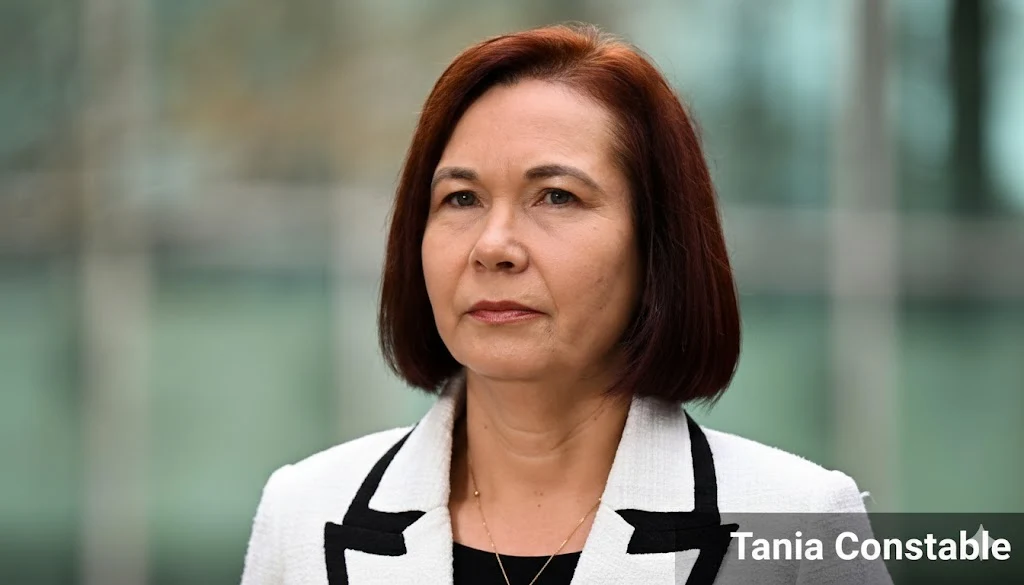
In the mining heartland of Australia, whether it be the red iron-ore ranges of the Pilbara or the coalfields of Queensland, Tania Constable is one of the most influential voices in steering one of the most important economic sectors of the nation.
Constable, who has been the Chief Executive Officer of the Minerals Council of Australia (MCA) since 2018, has influenced the national debate on resources, energy and sustainability. Her influence goes well beyond the boardroom, given the contribution of mining to GDP is over 10 per cent, and it employs hundreds of thousands of Australians.
The leadership of Constable revolves around three pillars that include economic strength, responsible management of the environment and community benefit. Her level-headed advocacy seeks to see to it that mining continues to be the backbone of Australia’s prosperity as it progresses to a net-zero future.
Who Is Tania Constable?
A well-known resource-sector executive with enormous potential in Australia is Tania Constable PSM. With the other two advanced degrees, Master of International Law, MBA and Graduate Certificate in Economic Policy, she has a unique combination of legal, economic and business knowledge in leading industries.
Prior to her tenure at the MCA, Constable had headed the CO2CRC (Collaborative Research Centre for Greenhouse Gas Technologies), a research centre based in Australia that was one of the world’s leading carbon capture and storage research centres. This experience placed her at the centre of the energy-transition debate in Australia, striking a balance between the reduction of emissions and energy security and competitiveness.
In 2014, she was awarded the Public Service Medal (PSM) for outstanding contributions to the liquefied natural gas (LNG) and energy industries in Australia — an honour that is awarded for exceptional services to the people of Australia.
During her 25-year career in government and industry, she has worked in the policy offices of Canberra and at the international negotiating tables to formulate the resources diplomacy of Australia.
Career Highlights: From Treasury to Industry Leadership
Constable has been working in the Australian Treasury as a chief adviser in the Personal and Retirement Income Division. There she had been employed, in tax policy–experience which was afterwards to influence her concept of the effects of fiscal structures in resource development.
Later, she was appointed to be the Head of Resources in the Department of Industry, where she gave policy advice to the Minister of Industry on oil, gas, exploration, and mining regulation. At this stage, Constable assisted in establishing the offshore petroleum structures and energy-security programs in Australia.
The most high-profile appointment that she has had in public service was as the Australian Joint Commissioner and Sunrise Commissioner of Australia and Timor-Leste, where she was in charge of negotiations in the Joint Petroleum Development Area and the Greater Sunrise Project. This was a position requiring its holder to use both technical and diplomatic abilities, and placed Constable at the nexus of resource development and international relations.
Curtin University has also recognised her achievements by presenting her with an Honorary Doctorate of Commerce in 2020 for her leadership in sustainable mining and energy.
Leading the Minerals Council of Australia
Taking up the role of MCA CEO in July 2018, the Australian mining industry was confronting significant challenges in the volatile commodity market, changing environmental demands, and heightened regulatory expectations. The MCA has under her leadership turned out to be one of the most visible and compelling industry bodies in the country.
The organisation is a symbol of the entire range of mining, including iron ore, gold, and coal, as well as critical minerals that are needed as components of clean-energy technologies. By 2023-24, the industry had an export of $455.6 billion and more than 300,000 direct jobs with a high average income of over $150,000.
These figures are used by Constable to support the importance of mining in financing hospitals, schools and the infrastructure in the regions of Australia. Campaigns like “All Australians Have a Stake in Australian Minerals” bring out the importance of the sector to the daily lives and also support the best green practices by encouraging optimal environmental practices under the Towards Sustainable Mining.
Advocacy and Policy Influence
The impact of Constable on the national policy is significant. She meets regularly with government ministers, gives submissions on policy in great detail and addresses high-profile events like the AFR Mining Summit and WA Mining Club.
Her activism is sometimes both technical and unashamedly pragmatic. In a speech in 2025 at Perth, she attacked the federal budget, saying that it had “forgotten mining” and that “Western Australia had been abandoned without mining”. She encouraged policymakers to continue with competitive tax environments and streamline environmental approvals to encourage investments and employment.
Some of her priority advocacies include:
- Fuel Tax Credits: Constable is a strong advocate of the current scheme, saying that eliminating or cutting fuel-tax rebates would put the survival of small contractors at risk and increase the cost of doing business in mining and transport.
- Environmental Approvals: This is where she demands an accelerated and regularised approval process to avoid stalling of investments without environmental protection.
- Industrial Relations Reform: Constable is against laws that are too restrictive about the workplace, arguing that they interfere with productivity and flexibility.
- Uranium Mining: She has commended South Australia to lift its ban on uranium mining, terming it nonsensical in a world that wants to find low-emission energy.
In these campaigns, Constable is seeking to strike a balance between economic competitiveness and environmental accountability and claims that mining can be sustainable and profitable.
Vision for the Future
Constable sees the future with the mining industry in Australia being competitive globally and spearheading the decarbonisation process. The MCA under her leadership has implemented a Climate Action Plan to achieve a net-zero emission that will be realised by 2050 and one that promotes innovation in technology like carbon capturing, electricity in its operations, and integration of renewable energy.
She points out that mining will provide the raw materials, such as lithium, copper, nickel, and rare Earths, that will be required to clean the global transition to clean energy. Every new mine, she points out, is not only a source of economic opportunity but also helps in achieving the objectives of the sustainability of the planet.
Constable can regularly remind policymakers of the multiple impacts of mining on its immediate employment. Each mining position sustains about six additional jobs in the broader economy, and each $1 million of mining demand will create $2.36 million of additional economic activity.
She is sending a message: Australia cannot afford to lose out on the competitive arena of the world markets in the case that the policy settings of the country turn hostile to mining investment.
Personal Background
Although Constable has remained mostly out of the limelight when it comes to her personal life, what we have gotten to see is a grounded professional who is family-oriented. She has been married to Robert Collins for more than twenty years, and the couple, at one time, even attracted the light-hearted media focus when they won a race-day fashion award in Canberra-evidence that even one of the most influential executives in Australia can be shown how to have fun outside the policy briefings.
Constable is estimated to be in her late 40s, but she has a mixture of experience and approachability, and thus she is a respected leader both in the political and corporate arenas.
Recognition and Professional Network
The Public Service Medal of Constable is one of the milestones that have not been achieved recently, yet her contribution to the LNG industry and resources development is long-term. She keeps interacting with the rest of the world, holding meetings with the corresponding individuals, like the Vice Minister of Mining Affairs of Saudi Arabia, to discuss international cooperation in critical minerals and low-emission technology.
Despite the fact that her personal LinkedIn profile is not open, her presence can be traced through posts made on MCA, where she shares comments on policies and updates on research. The 80-plus members of the MCA comprise BHP, Rio Tinto, and Newmont- a strong power base that is coordinated by Constable.
Conclusion: A Voice Defining Australia’s Resource Future
Tania Constable is the epitome of the combination of policy knowledge, industry experience, and practical leadership that characterises the modern resource advocacy. Her career as an adviser to the Treasury, international negotiator and chief executive of the largest mining organisation in Australia depicts the importance of effective policies in national well-being.
With Australia caught between the twin demands of economic sustainability and environmental sustainability, the consistent voice of Constable makes the mining industry a global champion and a home-grown source of employment, innovation, and a stable economy in the future.
To Australians, whether miners in the Pilbara or policymakers in Canberra, the work of Tania Constable illustrated how the nation will shape its resource future.