




The Sydney protest today has become the centre of national attention as tensions rise across New South Wales following a series of politically charged demonstrations and rapid government responses. What began as a controversial neo-Nazi rally outside the NSW Parliament has now escalated into a broader debate over public safety, extremism, immigration enforcement and the future of protest rights in Australia.
With a South African national detained, new anti-hate laws introduced and community groups demanding stronger protections, the Sydney protest landscape is shifting faster than ever. Authorities, activists and residents are watching closely as the latest developments reshape how public demonstrations are handled across the city — and what it means for the right to assemble in one of Australia’s busiest political centres.
South African National Detained After Sydney Protest
A major development unfolded today after the controversial Sydney protest outside the Parliament of New South Wales triggered strong action from federal authorities. South African national Matthew Gruter has been placed into immigration detention after his involvement in a neo-Nazi rally earlier this month. His work-sponsored visa was cancelled on character grounds once authorities confirmed he was photographed participating in the Sydney protest.
Gruter arrived in Australia in 2022 with his wife. The images from the protest showed him standing at the front of a group of about sixty men from the National Socialist Network, all dressed in black and chanting slogans associated with Hitler Youth ideology. The banner displayed at the rally, which read “Abolish the Jewish lobby”, intensified outrage across political and community circles.
Border Force detained Gruter between 4am and 5am today and transferred him to an immigration detention centre. He is expected to be deported unless he chooses to leave voluntarily. The government has confirmed he will not be allowed to return.
NSW Government Introduces New Laws Following Sydney Protest
In direct response to the Sydney protest, the NSW Government introduced new legislation aimed at curbing public displays of extremist ideology. The proposed amendments to the Crimes Act 1900 would ban Nazi chants, gestures and slogans, especially in locations near Jewish schools, synagogues and cultural centres.
Under the reform, those who breach the new laws could face up to two years’ imprisonment or heavy fines. Police would gain broader powers to demand identification, remove face coverings and intervene in public gatherings where hate-related behaviour is suspected. The government stressed that these changes are designed to stamp out extremist behaviour while still preserving peaceful Sydney protest activities.
Legal analysts have raised concerns over the definition of banned slogans and how these powers might be used in future assemblies. Some argue that the laws risk tightening protest rights beyond extremist groups, especially if enforcement becomes overly broad.
Broader Implications for Sydney Protest Today and Beyond
These developments place fresh scrutiny on how Sydney protests are managed. Authorities are signalling that extremist behaviour including incitement, hate slogans or organised far-right gatherings will be met with immediate consequences. The cancellation of a visa over protest involvement marks a turning point for protest regulation in Australia.
Jewish community groups largely welcomed the legislative shift, describing it as timely and necessary. Human rights advocates, however, have raised questions around the practical enforcement of these new laws. They emphasise that Sydney protests play an important role in democracy and must remain accessible for legitimate dissent.
With tensions rising across various social and political movements, the Sydney protest environment is undergoing significant change.
Sydney Protest Today and Public Safety Concerns
Public safety is now a central element of any Sydney protest today, especially after the neo-Nazi rally and the heavy police presence at recent gatherings. Authorities have become more cautious about approving protest routes, particularly those near Parliament House, the Sydney CBD and high-traffic areas. Police commanders have stressed that while protest rights remain protected, safety considerations including risks of violence, ideological confrontation and community harm now play a major role in decisions.
Crowd-control planning has increased, including more officers trained in rapid-response tactics and the potential for mounted police deployment. These measures may be more visible during Sydney protests today, especially when organisers expect large crowds or heightened emotion.
Community Reaction to Sydney Protest Today
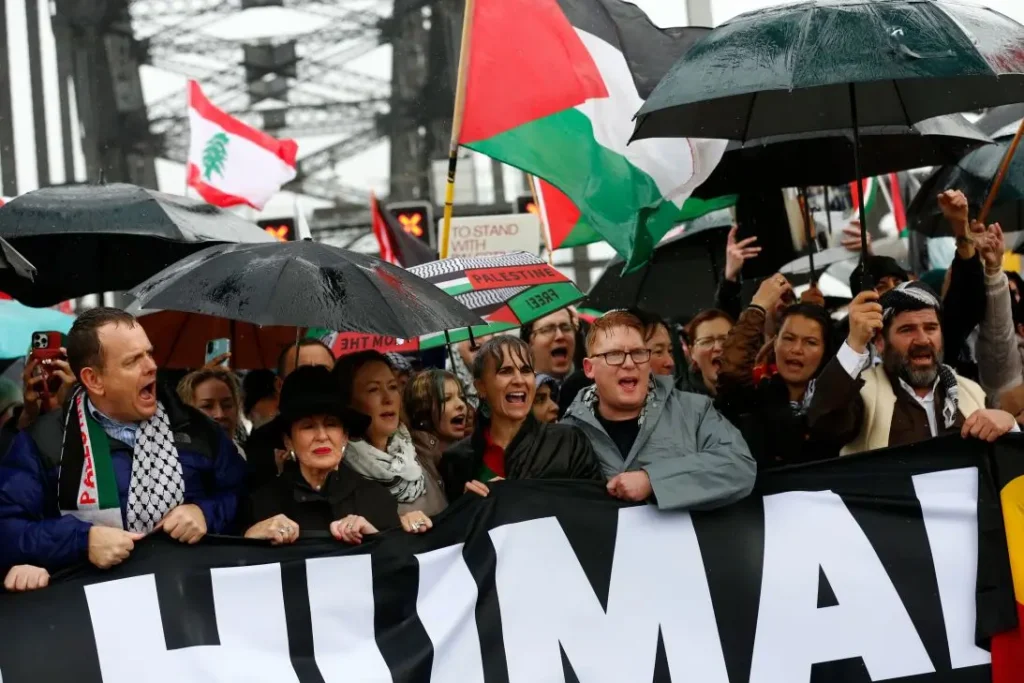
Reactions to the latest protest developments have been mixed. Jewish leaders strongly support the visa cancellation and new laws, arguing that Nazi symbolism poses an unacceptable threat. Many Sydney residents agree, calling the government’s response appropriate and overdue.
Conversely, civil liberties organisations have raised concerns over the future of public assembly. They fear that the strong reaction to the extremist Sydney protest today may influence police behaviour at unrelated events, such as political marches, social-justice gatherings or humanitarian rallies. They warn that peaceful groups could face the same level of scrutiny applied to extremist organisations.
The Sydney protest today has sparked renewed discussion about balancing public safety with the right to dissent — an issue likely to remain contentious as new laws are debated.
What Sydney Protest Today Means for Future Demonstrations
The fallout from the Sydney protest today is expected to have lasting implications. Protest organisers are watching closely to see how new laws will shape the approval and policing of public gatherings. Immigration authorities have signalled that non-citizens involved in extremist protests will face immediate consequences, which may deter international activists or temporary visa holders from participating in high-risk demonstrations.
The proposed anti-hate laws may also reshape how Sydney protests are structured. Organisers may alter routes, messaging or signage to avoid legal complications. Meanwhile, police are likely to tighten their monitoring of rallies that are ideological, large in scale or linked to global conflicts.
Sydney’s protest culture remains strong, but the environment is clearly shifting. As the city moves through a tense political period, authorities, communities and activists will continue negotiating the boundaries of lawful protest.
Political Pressure Builds as Sydney Protest Today Shapes State Debate
The Sydney protest today has intensified political pressure on the NSW Government, forcing ministers and opposition leaders to clarify their positions on free speech, extremism and public assembly. Senior officials from both sides of politics have acknowledged that the rally has exposed gaps in existing legislation, particularly around hate-filled gatherings that exploit loopholes in demonstration laws. Government ministers argue that stricter measures are essential to prevent extremist groups from gaining visibility, especially in locations as symbolic as the NSW Parliament.
The Opposition, meanwhile, has urged caution, calling for balanced reforms that protect vulnerable communities without undermining the civil liberties of ordinary Australians. Some members have proposed complementary rules, such as banning face coverings at politically sensitive protests to ensure transparency and public safety. With the state parliament gearing up for debate, the Sydney protest today is already influencing legislative priorities and reshaping long-term approaches to public order.
How Sydney Protest Today Reflects a Broader Shift Across Australia
While today’s events are centred in Sydney, the impact is being felt nationwide. The Sydney protest today mirrors a broader trend in Australia where political tensions, global conflicts and online radicalisation have contributed to more frequent and more polarised demonstrations. Cities such as Melbourne, Brisbane and Adelaide have seen their own spikes in politically charged gatherings, but the Sydney protest today stands out due to its extremism-related consequences.
Federal authorities are increasingly concerned that extremist groups may attempt to exploit Australia’s protest laws to stage high-visibility events. The rapid visa cancellation following the Sydney protest today is also being closely watched by other states, as it sets a powerful precedent that may influence how immigration powers are used in similar scenarios. National security experts believe that the combined effect of social media mobilisation and ideological spillover from overseas conflicts means that Sydney protests will likely remain a focal point for national attention.
Conclusion
The latest developments surrounding the Sydney protest today highlight a significant shift in how Australia responds to extremist activity, hate speech and public assembly. The detention of a South African national, combined with the introduction of new anti-hate laws, marks a turning point for protest regulation in New South Wales. Sydney protests remain a vital part of public expression, but the legal and social landscape surrounding them is rapidly evolving.
FAQs
What happened at the Sydney protest today?
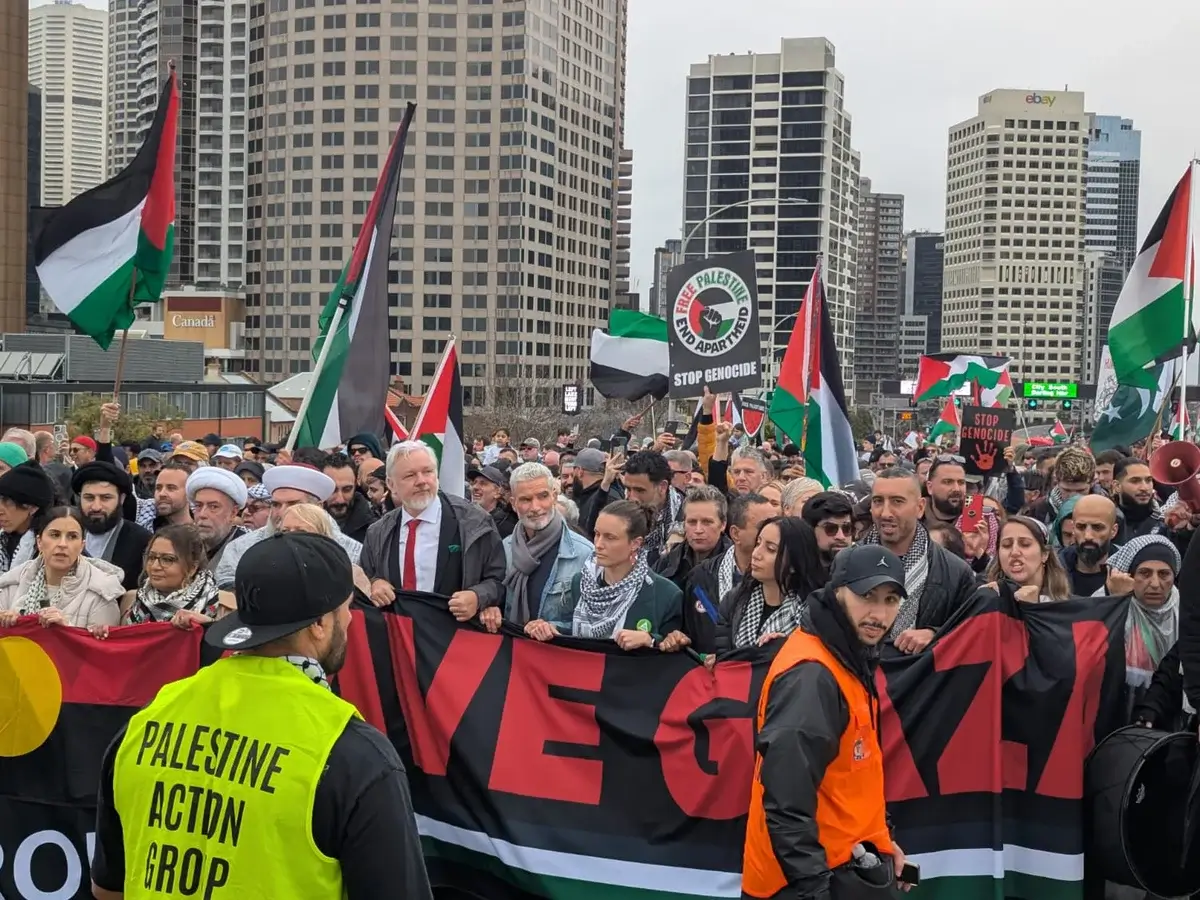
The Sydney protest today centred on heightened tensions around recent political demonstrations, including reactions to a neo-Nazi rally, pro-Palestine gatherings and public responses to the Defence and Weapons Expo taking place in the city. Police presence across key CBD locations was increased as authorities monitored multiple protest-related activities.
Why is the Sydney Weapons Expo drawing protests?
The Sydney Weapons Expo, part of the IndoPac Sydney 2025 program, has attracted strong criticism from activists who oppose Australia’s involvement with international defence companies. Many groups argue that the expo promotes arms development linked to global conflicts, prompting demonstrations both outside the event and throughout the Sydney CBD.
What is IndoPac Sydney 2025?
IndoPac Sydney 2025 is one of Australia’s largest defence trade events, bringing together global and domestic defence companies to showcase maritime, military and security technologies. The expo has sparked protests due to concerns over arms sales, international warzones and Australia’s defence partnerships.
Was there a Sydney Palestine protest today?
Yes, Sydney Palestine protest today activities took place near the CBD and around the area of the defence expo. Protesters gathered to call for an end to violence in Gaza and to oppose the participation of certain defence manufacturers associated with international military operations.
Why are people protesting the Defence Expo Sydney?
Protesters claim that the Defence Expo Sydney promotes weapons used in global conflicts and undermines humanitarian efforts. Critics especially targeted companies linked to Middle Eastern conflicts, arguing that the expo normalises warfare while contributing to human suffering abroad.
Where did the Sydney CBD protest today occur?
The Sydney CBD protest today occurred near the International Convention Centre, Town Hall and surrounding streets. Police issued warnings about congestion as groups marched through the CBD to voice concerns related to defence spending, extremism and international human-rights issues.
What is Defence Expo Australia 2025?
Defence Expo Australia 2025 is a large-scale national defence event that showcases advanced military technologies, cybersecurity systems, naval capabilities and defence partnerships. It attracts government delegations, military representatives and defence contractors, and regularly draws protests due to the nature of its exhibits.
Why is the arms expo in Sydney controversial?
The Arms Expo Sydney has become controversial because of its connection to global arms trade, allegations of human-rights violations linked to some exhibitors, and concerns from community groups about Australia fostering defence relationships with foreign powers involved in international conflicts.
Are protests expected to continue throughout IndoPac Sydney 2025?
Yes. With IndoPac Sydney 2025 running across multiple days, authorities expect further protests. Groups aligned with Palestine solidarity movements, anti-war activists and other civil-rights organisations announced they may continue demonstrations around the expo venue and the CBD.
How are police responding to the Sydney protest today?
NSW Police have increased their presence around the CBD, ICC Sydney and transport hubs. Officers have been deployed to manage crowds, maintain safety and prevent disruptions to the IndoPac Sydney 2025 expo. Some arrests and detentions occurred earlier this week during similar protests.
