



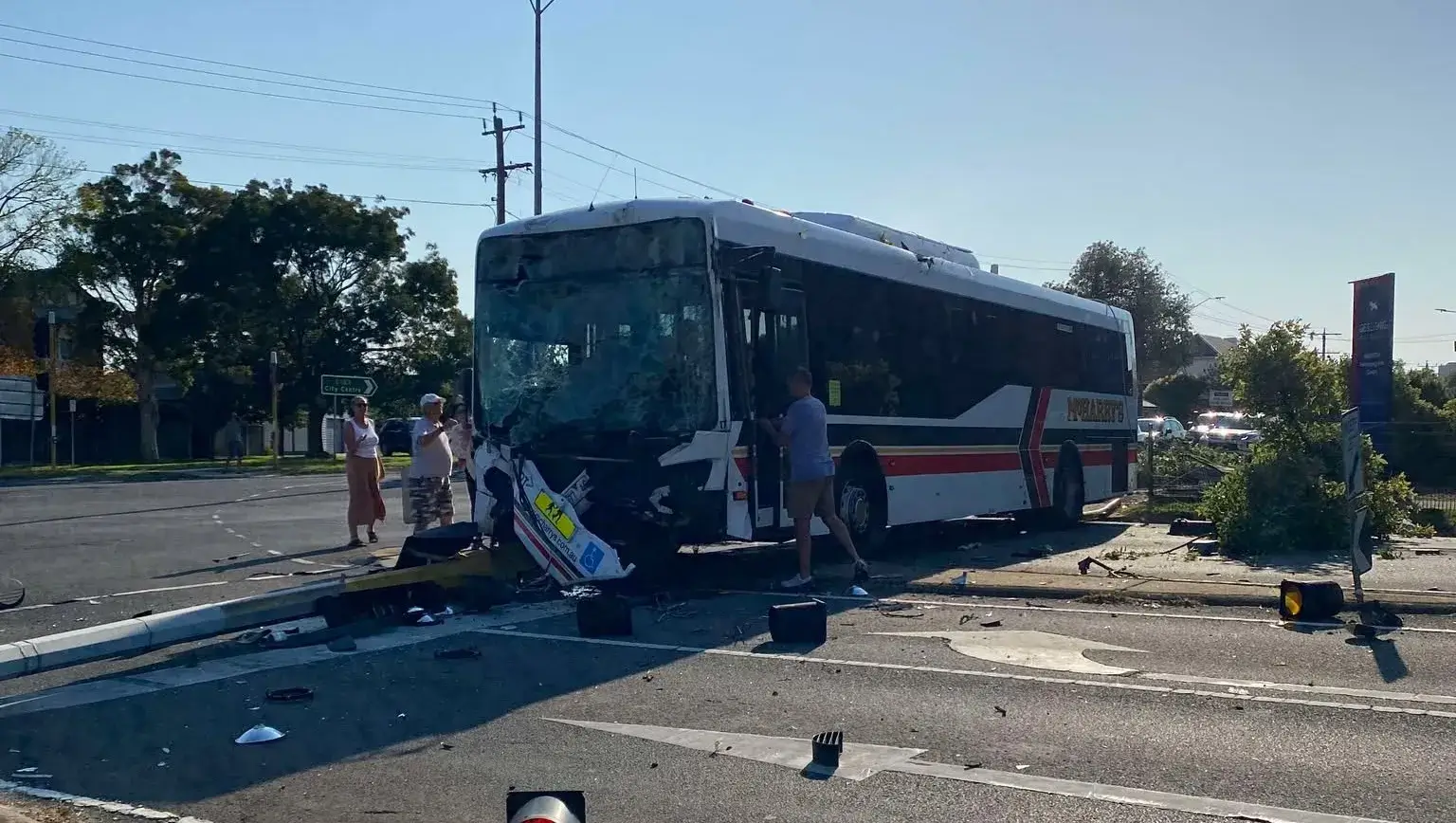
Bus safety has always been a major concern in Australia, and recent events as well as a lengthy history of fatal collisions demonstrate the continued urgent need for reforms. The rollover of the Stonehaven school bus in 2025 has rekindled discussions about community responsibility, driver standards, and design. However, it’s not an isolated incident; Australia has already seen significant bus accidents, and the current policy response attempts to address systemic concerns.
The Stonehaven Rollover of 2025: A Pivotal Event
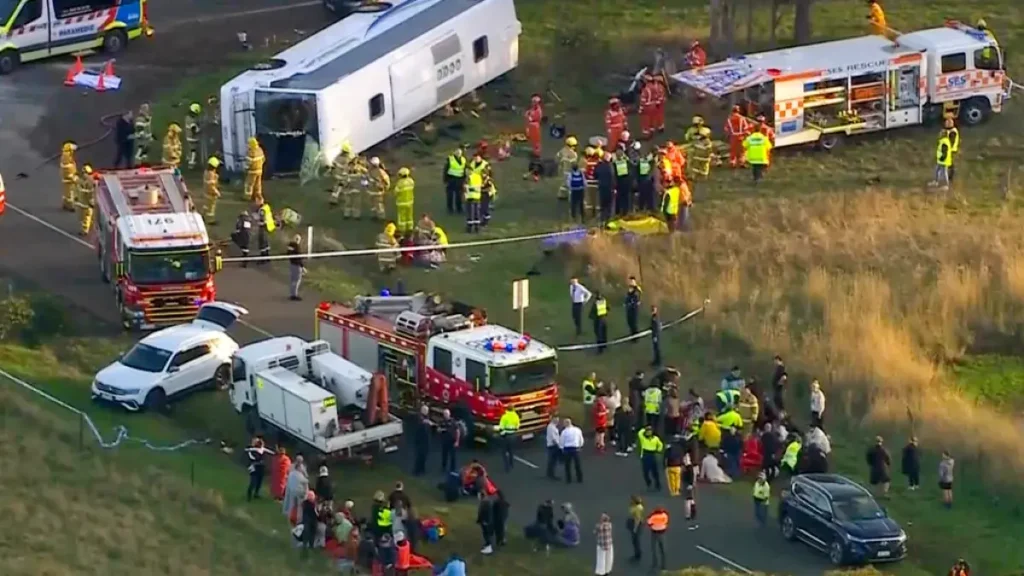
A school bus transporting 28 pupils from Christian College Geelong overturned on August 27, 2025, at about 8:20 a.m., close to Stonehaven, Victoria, at the intersection of Friend in Hand Road and the Hamilton Highway. The bus hit guardrails on the side of the road, slid, and missed the left-hand turn.
Sadly, Milla Killeen, a Year 7 pupil, died at the age of 12. More than 20 other students were hurt; some received treatment at nearby hospitals, and one 16-year-old kid was flown with significant but non-life-threatening injuries. Although the 76-year-old driver was also hurt, he was later allowed to leave the hospital and is now helping the Victoria Police Major Collision enquiry Unit with their enquiry.
Detectives are looking into things like speed, seatbelt usage, road geometry, and vehicle upkeep. To further comprehend the collision, authorities are requesting dash-cam and CCTV video from the vicinity.
Local and state officials, together with the Christian College community, reacted promptly. The school has arranged for staff, parents, and kids to receive counselling and assistance. Education Minister Ben Carroll and Victorian Premier Jacinta Allan both expressed their deep sadness and promised continued assistance.
A More Comprehensive View: The New England Highway Collisions
On February 13, 2025, a separate but equally deadly occurrence happened on the New England Highway, close to Bendemeer, NSW. A young motorcycle and a bus moving in the other direction collided head-on. The bus driver was hospitalised with a fractured leg, and the passenger passed away at the site.
Police asked anybody with dash-cam video to come forward and blocked the roadway for enquiry. This incident demonstrated how dangerous it is for buses to be engaged in crashes even when there are no passengers on board, particularly on regional roadways.
Bus Safety Snapshot: How Frequent and Severe Are Accidents?
Looking at national statistics helps explain why changes are being pushed.
- Around 1.6% of all fatal traffic incidents in Australia occur in buses, according to the traffic Safety Data Hub (2014–2023).
- An average of 239 bus passengers were admitted to hospitals annually as a result of transportation incidents between 2012 and 2021.
- Less than 1% of all traffic deaths in previous decades included bus or coach passengers, making bus travel statistically safer than many other modes of transportation, according to the Bus Industry Confederation (via Bus SA).
- According to these statistics, bus travel is safer than other forms of transportation, particularly driving, but when accidents do occur, particularly with big buses, the repercussions may be severe.
An Account of Significant Bus Accidents: Insights from the Past
To put the current events in perspective, there have been a number of disastrous bus accidents in Australia’s history:
The 1989 Kempsey Bus Crash
Thirty-five people were killed and forty-one injured when two coaches crashed head-on on the Pacific Highway in Kempsey, New South Wales, on December 22, 1989. Calls for modifications to coach building standards, driver tiredness regulations, and highway design were sparked by the crash’s severity, which resulted in seats being dislocated and people being flung forward.
The 1989 Grafton Bus Crash
Twenty-one passengers were killed and several others were injured when a Sunliner Express coach and a vehicle crashed on October 20, 1989, close to Grafton, New South Wales. The collision brought attention to the risks presented by big cars as well as the hazards on small routes.
Wedding Bus Crash in Hunter Valley (2023)
A bus transporting wedding guests overturned on June 11, 2023, close to Greta, NSW. Twenty-five people were hospitalised and ten people died. A 32-year jail term with a 24-year non-parole period was eventually imposed on the driver.
The drive to implement ADR 68/01 changes was directly impacted by this tragedy. These significant examples demonstrate that bus accidents are not isolated occurrences but rather have recurred under various circumstances over decades, serving as a reminder that design, regulation, and driver fitness are still crucial.
The Reform Shift: The Significance of ADR 68/01
The Australian government implemented Australian Design Rule 68/01 Occupant Protection in Buses in January 2025.
Infrastructure Department
This is a significant modification to increase bus occupant safety.
Important aspects of ADR 68/01:
- To encourage seatbelt usage, buses equipped with 3-point seatbelts will need both visible and auditory cues.
- Within five seconds of the last passenger door shutting, the visual warning must be plainly visible.
- After shutting, an auditory announcement that reads, “Please fasten the seatbelt while seated,” must play.
- A passenger recognition system is an alternative that minimises disruption by playing the alarm only when new passengers board.
- The regulation will apply to all new bus and coach types as of November 1, 2026.
- minister.infrastructure.gov.au
- Many current buses must conform by November 1, 2027, if at all possible.
- Infrastructure Department
- The estimated cost to install the alert system is around AUD $2,490 per car.
The purpose of these signals is to close the gap between the availability of seatbelts and the actual usage of them by passengers. Many long-distance or regional buses have seatbelts, however there is low seatbelt compliance, especially on board when reminders are less frequent, according to the Bus Industry Confederation.
Crucially, ADR 68/01 closes a gap: certain coaches were previously excused from wearing seatbelts at all.
The Importance of This Reform Today
- Catalyst: Public and political pressure for reform was triggered by the 2023 Hunter Valley accident, which claimed ten lives.
- Safety baseline: By standardising warnings, the reform encourages safer conduct without imposing severe fines; it aims to encourage rather than punish passengers.
- Industry support: The initiative has received support from the Bus Industry Confederation. Reminders, they contend, will lower risk during bad driving and assist drivers in managing seatbelt compliance.
- Non-retroactive retrofit: While the ADR establishes a more precise standard for future design, it does not impose seatbelt systems on all older buses that do not now have them.
New Risks and Policy Issues
ADR 68/01 is a significant step, but it’s not the sole solution that’s required. There are still a number of persistent issues:
Fatigue and Driver Training
Long hours or driver exhaustion were factors in a number of previous accidents, including Kempsey.Enhancing driver licencing, relaxation periods, and health examinations might lower the danger of human mistake.
Age and Maintenance of the Bus Fleet
Older buses continue to operate in regional and school services, despite the fact that many collisions involve more recent models. Although data indicates that buses under ten years old account for a significant portion of collisions, maintenance is still crucial.
Frequent safety audits and mechanical inspections must be maintained, not only required.
Culture & Education for Passengers
Alerts are one thing, but passengers, particularly kids, must understand the importance of wearing seatbelts. Schools may need to conduct safety education programmes, especially in areas with high bus use.
Evaluation of Route Risk
Highway crossings, tight turns, and rural roads continue to be dangerous. Route planning is important, as seen by crashes like Stonehaven. Safety audits of school pick-up and drop-off locations should be a top priority for transportation authorities.
Long-Term Assistance Following Accidents
A serious bus accident may cause psychological stress that lasts for years. Counselling, memorial services, and community support are essential. Local governments and schools should develop long-term rehabilitation strategies rather than only quick fixes.
Looking Ahead: What Must Take Place
Australia should think about the following to lower risk and avoid tragedies:
- Extending ADR coverage: If at all feasible, look at putting seatbelt reminders into more of the current fleet.
- Tighter driver regulations: Make advanced training, health examinations, and fatigue management mandatory for school bus drivers.
- Safety-first contract requirements: Schools should give preference to bus service providers that have a strong safety record and maintenance schedule.
- Continuous data transparency: In order to influence policy, road safety organisations are required to provide bus collision data on a regular basis, including deaths, injuries, and reasons.
- Campaigns in the community: Persuade parents, students, and drivers that wearing seatbelts is a normal safety practice.
- Establish long-term support services for accident survivors, victims’ relatives, and impacted school communities as part of the mental health follow-up.
Conclusion
The 2025 Stonehaven school bus rollover made Australia reevaluate its bus safety measures, particularly with regard to kids. However, this is not the first tragic bus accident to hit the nation. There is a recurring cycle of loss, enquiry, and transformation from Kempsey in 1989 to Hunter Valley in 2023.
Australia is now adopting a proactive approach to risk reduction with ADR 68/01, which requires seatbelt reminders, improves design requirements, and closes loopholes. However, regulation is insufficient on its own. Strong driver education, improved infrastructure, community engagement, and sustained assistance for victims of tragedy are all essential components of true safety.
These changes have the potential to make buses safer than before if they are properly implemented. But alertness is crucial. Without continued dedication, the difficult lessons learned yesterday run the danger of being forgotten.
FAQs
Who were the Hunter Valley bus crash victims?
The Hunter Valley wedding bus crash on 11 June 2023 claimed the lives of ten passengers and injured twenty-five others. The victims were wedding guests travelling from a reception in Greta, NSW. Their names were publicly released by NSW Police with the permission of families. They included close friends of the bride and groom, along with members of the same sporting and community groups.
What is known about the Sweden bus crash driver’s identity?
In the November 2025 Stockholm bus crash, Swedish authorities confirmed that the driver was a man in his 40s. His full name has not been released publicly due to Sweden’s privacy laws. He was initially arrested on suspicion of causing death and injury but was later released when investigators found no evidence of deliberate wrongdoing.
What happened in the Kempsey bus crash?
The Kempsey bus crash occurred on 22 December 1989 on the Pacific Highway in NSW when two coaches collided head-on. Thirty-five people were killed and forty-one were injured, making it one of Australia’s worst road disasters. The tragedy led to major reforms in highway upgrades, speed-limit reviews, and fatigue-management regulations for commercial drivers.
Who were the Singleton bus crash victims?
The Singleton bus crash victims were among the guests from the Hunter Valley wedding party in 2023. Many were young adults, married couples, and close friends who had attended the wedding. The crash had a major impact on the local Singleton community, where many victims lived or worked. Memorial services were held throughout the region.
What injuries were reported in the Hunter Valley bus crash?
The Hunter Valley wedding bus crash resulted in severe injuries for many passengers, including head trauma, spinal injuries, fractures, and internal injuries. Twenty-five survivors required hospitalisation. Several underwent surgery, and many continued to receive long-term rehabilitation due to the seriousness of the crash.
What caused the Hunter Valley wedding bus crash?
The investigation found that the bus overturned while navigating a roundabout near Greta, NSW. Prosecutors alleged that the driver was travelling too fast for the conditions. In 2024, the driver was convicted and sentenced to 32 years in prison with a 24-year non-parole period. The crash prompted nationwide discussions about bus safety and driver accountability.
Is there a full list of major bus crashes in Australia?
Yes. Government road-safety databases and public sources such as the Australian Road Deaths Database list major bus crashes. Some of the most significant include the 1989 Grafton crash, the 1989 Kempsey crash, the 2023 Hunter Valley crash, and various school-bus incidents across regional Australia. These records help guide safety reforms and policy development.
Who were the wedding couple involved in the Hunter Valley bus crash?
The couple married that day were not injured, as they were not on the bus when it overturned. Out of respect for privacy, their names were not widely circulated in media reports. They provided public statements expressing heartbreak and support for the families of their friends who were killed or injured.