



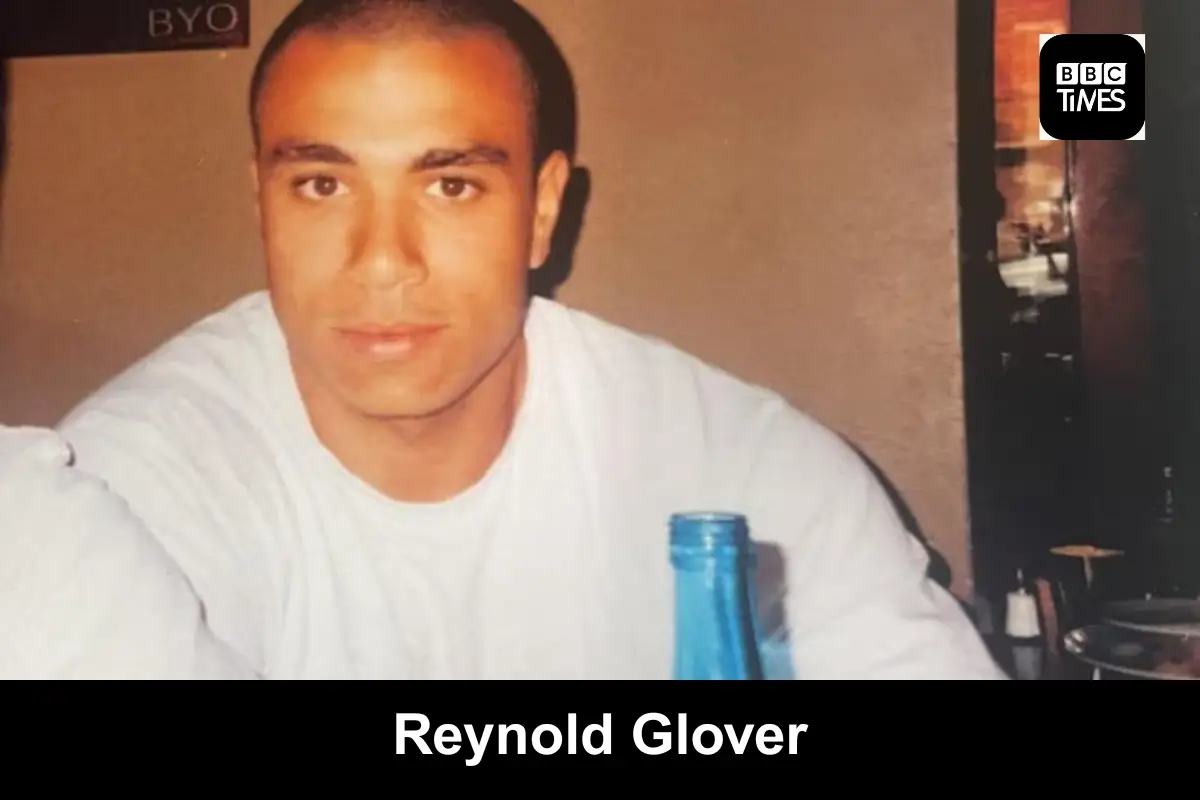
For almost a decade, Australia knew the crimes but not the man. Armed robberies carried out in public view, witness intimidation, prison confrontations and a retaliatory shooting all appeared in court reporting, yet the central figure remained unnamed. That silence was not accidental. It was enforced through a rare and extensive series of suppression orders designed to protect the integrity of multiple overlapping trials.
When those orders were finally lifted in September 2023, the name Reynold Glover entered the public record for the first time. What emerged was not a single crime or a brief period of offending, but a continuous criminal career that began in childhood and escalated into one of the most feared reputations in New South Wales’ underworld.
This article brings together all available Australian reporting and court outcomes to present a complete account of Reynold Glover’s life of crime, the police investigations that pursued him, and the legal battles that kept his identity hidden for years.
Childhood, Poverty and the First Murder Charge
Reynold Glover grew up in Sydney’s inner west, an area frequently referenced in reporting about his early life. Journalists later described him as a poor and skinny kid, living on the margins and exposed early to violence. His first major interaction with the criminal justice system came at an age that shocked even seasoned police.
In 1999, when Glover was just 12 years old, NSW Police charged him over a home invasion that ended with a man being stabbed and beaten to death. The allegation placed a child at the centre of a murder investigation. Glover spent 176 days on remand while prosecutors assessed whether the case could proceed.
Ultimately, the murder charge was dropped. The court accepted a plea to robbery in company instead. While spared a murder conviction, Glover’s time in custody at such a young age placed him firmly on police radar and marked the beginning of a criminal path that would intensify rather than fade.
Early Adulthood and Escalation Into Organised Crime
By his early twenties, Glover had moved beyond street-level offending. In 2009, at just 22 years old, he became a central suspect in one of the most ambitious robbery investigations NSW had seen. Sydney was hit by a wave of high-adrenaline armed robberies targeting cash-in-transit vehicles. The crimes were carefully planned, fast, and executed with military-style precision.
More than six million dollars was stolen. Police believed the robberies were coordinated rather than opportunistic, and intelligence pointed toward Glover as a key organiser. Investigators alleged he planned routes, selected targets and coached younger offenders on how to carry out armed robberies.
A crucial break in the investigation came when a Chubb cash docket was discovered in a South Sydney unit block. That seemingly small piece of evidence blew the case wide open, allowing police to connect multiple robberies and identify a network of suspects. It was during this phase that a protected witness, known publicly as Mr X, emerged as central to the prosecution case.
Mr X, Witness Protection and the $6 Million Trial
Mr X was not a peripheral figure. Australian reporting described him as the cornerstone of the prosecution’s case against Glover and his alleged associates. The perceived danger to the witness was so great that he was placed into witness protection.
The trial that followed became a marathon. It ran for approximately five months and drew intense attention from police, media and the underworld alike. The prosecution believed the case was strong. Surveillance, witness testimony and circumstantial evidence painted a picture of a coordinated robbery network.
When the verdicts were handed down, they stunned observers. Reynold Glover was acquitted of all charges. Only around five hundred thousand dollars of the stolen money was ever recovered.
Inside criminal circles, the acquittal transformed Glover’s standing. At 22, he had beaten a prosecution tied to millions of dollars and months of court time. Journalists later described this moment as the point where he shifted from dangerous offender to underworld power.
The Strategic Mistake: Threatening Mr X After Acquittal
The acquittal did not end police attention. In fact, it intensified it. After the trial, authorities alleged that Glover threatened Mr X. Australian reporting later described this as a major strategic error.
Threatening a protected witness after an acquittal did not change the verdict, but it confirmed police suspicions that Glover had been central to the robbery network. It also justified continued surveillance and extreme caution in future proceedings. The threats became one of the reasons courts later cited when maintaining long-running suppression orders.
From this point on, police interest in Glover never receded.
Covert Recordings, Coaching Crime and the Perjury Conviction
In 2013, NSW Police obtained covert recordings that would alter the course of Glover’s legal history. On tape, he was recorded admitting that he had lied under oath during the $6 million robbery trial. In separate recordings, he was also heard agreeing to teach a crime figure’s younger brother how to rob a cash-in-transit van.
Australian reporting went further, stating that after offering to coach the technique, Glover then went and demonstrated it in practice. These recordings reinforced police views that he was not merely a participant in crime but a mentor and trainer within organised networks.
The admission of lying under oath led to a perjury charge. Unlike the robbery case, this prosecution succeeded. Glover was convicted and jailed for perjury, a rare legal outcome that followed an earlier acquittal and confirmed police beliefs that the truth of the robbery case had never fully surfaced.
The Broadway Shopping Centre Armed Robbery
Later in 2013, while still under intense police scrutiny, a daylight robbery shocked Sydney commuters. Outside Broadway Shopping Centre, during morning peak hour, a cash-in-transit van was ambushed by armed men carrying assault-style rifles.
The robbery unfolded in full public view. Traffic stopped. Pedestrians froze. Some witnesses initially believed they were watching a film shoot until they saw the fear on the guards’ faces. The presence of heavy weapons ensured compliance without a shot being fired.
The offenders escaped within minutes. Police investigations quickly linked the robbery to organised crime figures already known to authorities. Reynold Glover was charged in connection with the offence.
Yet once again, the public did not know his name.
Multiple Suppression Orders and a Decade of Silence
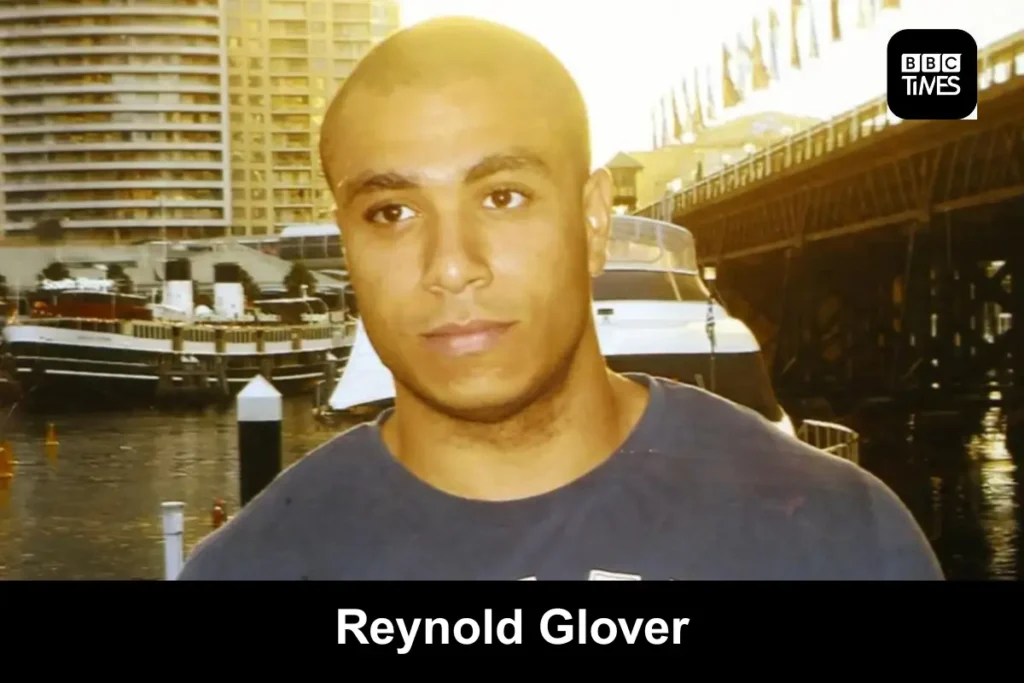
By this point, Glover had accumulated so many serious criminal matters that courts took the unusual step of imposing multiple suppression orders on his identity. In total, four separate non-publication orders were put in place by the NSW District Court.
Judges cited the risk of jury prejudice as the primary reason. With overlapping trials, protected witnesses and extensive media interest, revealing Glover’s identity was considered too dangerous to the integrity of the legal process.
For almost ten years, Australians read about crimes without knowing the man behind them. Journalists later described the level and duration of suppression as one of the most extreme examples in NSW criminal history.
The Feud With Bassam Hamzy and the Retaliation Shooting
Running parallel to robbery investigations was a violent personal feud between Glover and Sydney crime boss Bassam Hamzy. Australian reporting traced the escalation of that feud to a theft that struck close to home.
Five thousand dollars was stolen from Glover’s mother. The theft was linked to Bilal Hamze, a cousin of Hamzy. Rather than seek mediation or restitution, Glover responded with direct violence.
He went to the home of Hamzy’s aunt and shot her. The act was widely reported as a deliberate message within the underworld. NSW Police arrested Glover and charged him with attempted murder.
The case resulted in a conviction. Glover was sentenced to more than twenty years in prison, ensuring long-term incarceration and cementing his reputation as someone willing to escalate conflicts without restraint.
Prison Intelligence, Recordings and Life Behind Bars
Glover’s influence did not end with imprisonment. Australian reporting detailed how police and corrective services continued to monitor him closely. Intelligence operations included recorded jail conversations and monitored visits, including lengthy meetings with notorious inmates at Lithgow jail.
Inside custody, Glover was described as confrontational and defiant. He clashed with other inmates, including Hamzy, and was repeatedly transferred between facilities. He spent extended periods in Supermax conditions and reportedly told associates he preferred isolation over mixing with the general prison population.
Media reports stated he set fire to his cell on multiple occasions and remained a prolific letter writer, maintaining connections with criminal figures from behind bars. Prison authorities viewed him as an ongoing management challenge rather than a compliant inmate.
The Final Case and the Unmasking in 2023
The silence surrounding Reynold Glover ended only after his final outstanding criminal matter was resolved. In July 2023, his lawyer entered a guilty plea in the Sydney District Court to the 2013 Broadway armed robbery.
With no remaining trials at risk, News Corp successfully challenged the suppression orders. In September 2023, the court lifted the final non-publication order, allowing Glover’s identity to be reported for the first time.
The media reaction was immediate. Headlines described him as Australia’s baddest man and an apex predator of NSW’s underworld. Journalists emphasised his age, 37 at the time of unmasking, and the extraordinary length of time his identity had been hidden.
Legal commentators noted the case as a rare and significant example of how far Australian courts will go to balance open justice against fair trials.
Sentences, Incarceration and Current Status
Reynold Glover’s criminal record includes a conviction for attempted murder, a conviction for perjury, a guilty plea to armed robbery, and earlier guilty pleas and acquittals. His sentence of more than twenty years for attempted murder ensures he will remain incarcerated for many years.
Australian media have not published a confirmed parole or release date. At last report, Glover remained in custody within the NSW prison system.
Conclusion
Reynold Glover’s story is not one of sudden exposure, but of delayed recognition. His crimes were known long before his name was published. What suppression orders delayed was not justice, but attribution.
From a childhood charge for murder to organised robberies worth millions, from courtroom deception to retaliatory violence and prison dominance, his criminal career followed a relentless path. When the courts finally lifted the silence, Australia saw the full scope of a life shaped by crime, investigation and consequence.
This account reflects what has been reported, what has been tested in court and what has been proven. Nothing has been added. Nothing has been assumed.
FAQs
Where was Michael Drury shot?
Michael Drury was shot outside his home in Collaroy Plateau, Sydney, in 1998. He survived the attack, which was widely reported as part of Sydney’s organised crime violence during that period.
Who is Australia’s most notorious outlaw?
There is no single official answer, but Ned Kelly is most commonly regarded as Australia’s most notorious outlaw due to his violent confrontations with police, bank robberies, and execution in 1880.
Who is Mick Gatto?
Mick Gatto is a Melbourne underworld figure best known for his involvement in Victoria’s gangland era. He gained public attention after being acquitted of murder in 2004 and later became a public commentator and businessman.
What has happened to Richard Glover?
Richard Glover is an Australian radio broadcaster, columnist, and author. He continues to work in media and public commentary and is not connected to organised crime or criminal investigations.
What is Sydney’s best kept secret?
The phrase “Sydney’s best kept secret” is commonly used in media to describe hidden crime figures whose identities were suppressed by court orders, as well as lesser-known cultural, historical, or geographical aspects of the city depending on context.
What famous rapper was shot?
Several famous rappers have been shot over the years. One of the most well-known cases is Tupac Shakur, who was shot multiple times in Las Vegas in 1996 and later died from his injuries.
Who was the richest convict in Australia?
Francis Greenway, a transported convict turned architect, is often cited as one of the most successful former convicts, gaining wealth and status after serving his sentence in early colonial Australia.
What did Ned Kelly say before he was hanged?According to historical records, Ned Kelly’s final reported words before his execution in Melbourne in 1880 were:
“Such is life.”