



Jelena Dokić has spent most of her life under public observation. From her teenage rise in professional tennis to her current role as a broadcaster, documentary subject and advocate for mental health, her body, choices and personal life have been repeatedly scrutinised. In recent years, that scrutiny has increasingly centred on images she has chosen to share herself — particularly bikini and swimsuit photos that continue to drive search interest across Australia.
The phrase “Jelena Dokić bikini” trends not because of scandal, but because each image is layered with meaning. They are not casual holiday snaps detached from context. They are moments that intersect with conversations about health, ageing, body image, public judgement and emotional recovery. What might otherwise be treated as celebrity lifestyle content has instead become a recurring national discussion about how women are assessed, criticised and reduced to appearance at every stage of life.
To understand why these photos resonate so strongly, it is necessary to view them through the full arc of Dokić’s life and career.
Growing Up in the Spotlight
Jelena Dokić rose to international tennis prominence at an age when most athletes are still learning how to manage pressure. At just sixteen, she stunned the sporting world by reaching the Wimbledon semi-finals, later climbing to a career-high singles ranking of world number four. Her talent was undeniable, and her success came quickly. With it came intense attention.
From the beginning, her performances, emotions and appearance were dissected. She was rarely allowed to exist simply as a young athlete. Expectations were heavy, judgement was constant, and empathy was often absent. That scrutiny did not fade as she grew older. It followed her into adulthood, into retirement and into public life beyond the court.
After stepping away from professional tennis, Dokić transitioned into broadcasting and became a familiar presence as a Channel Nine tennis commentator. Her sharp analysis and direct communication style earned respect, but the public gaze never fully shifted away from her personal life. Over time, she chose to speak openly about experiences she had previously kept private, including alleged physical, emotional and financial abuse by her late father and coach.
That story was later shared in the documentary Unbreakable, which aired to widespread attention in Australia. The documentary reshaped public understanding of Dokić, reframing her not just as a former athlete, but as a survivor who had chosen to speak openly about trauma. In 2025, Unbreakable earned her her first Logie nomination, a moment that acknowledged not just the film itself, but the cultural impact of her honesty.
The Bikini Photos That Reignited Public Attention
In the years following the documentary, Dokić’s social media presence became another platform for reflection rather than performance. Among the most discussed posts were bikini and swimsuit photos shared from European holidays, particularly in Croatia, where she was born.
One image in particular became central to renewed interest in the search term “Jelena Dokić bikini”. The photo, taken in 2019 in the Croatian city of Dubrovnik, shows Dokić seated on a rocky shoreline, her back to the camera, looking out across crystal-clear Adriatic water while wearing an electric blue two-piece bikini. There is no deliberate pose, no direct engagement with the lens. It is a quiet, contemplative image.
Years later, during the Easter period, Dokić reposted the photo with a short caption that carried emotional weight. “Mentally here. Plus, it’s only Tuesday.”
The reaction was immediate and telling. Fans commented not on her body, but on her sense of calm and confidence. One wrote, “You were only a baby in that photo.” Another added, “Look how far you’ve come Jelena.” Others described her as inspiring and noted the peace the image seemed to convey. The photo itself had not changed, but the context had. It was no longer simply a holiday snapshot. It became a reminder that she was whole and worthy then, just as she is now.
New Bikini Photos After Wimbledon
In July 2025, shortly after wrapping up weeks of demanding commentary duties for Channel Nine during Wimbledon, Dokić shared new bikini photos from a European summer holiday in Croatia. At 42, she posed confidently by the ocean and later walked along the coastline in a red linen dress.
Alongside the images, she wrote words that Australian outlets widely quoted. “Me, free and unapologetically myself.”
She followed with a longer reflection that directly addressed judgement. She urged people to stop living according to others’ opinions, whether those opinions related to body size, clothing, hair, beliefs or emotions. “Be you. Be unapologetically you,” she wrote. “You’ve got one life to live so live it free.”
The response was overwhelmingly supportive. Fans filled the comments with messages such as “You are looking beautiful and at peace” and “So much wisdom in those words.” Australian media framed the post not as a display of confidence earned through physical change, but as a moment of emotional release after an intense period of work.
Around the same time, Dokić shared another bikini selfie with a caption that became a headline in itself. “Holiday mode fully activated. Beach day.” The image was again contextualised by Australian outlets as part of a broader narrative about rest, balance and allowing space for personal wellbeing rather than appearance.
Bikini Photos With Purpose, Not Performance
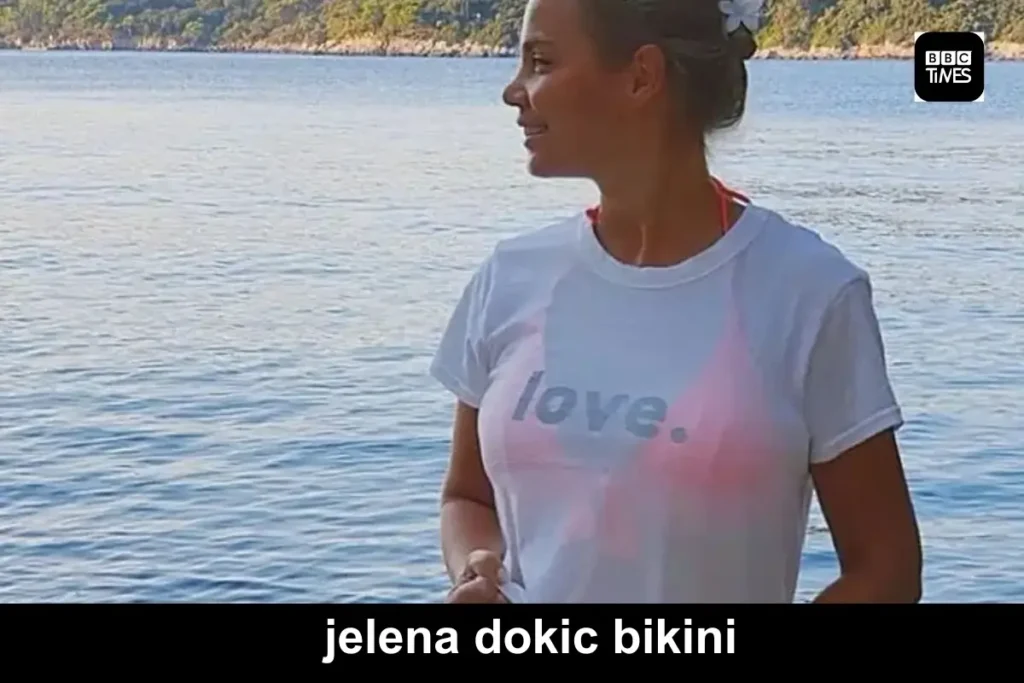
What distinguishes Dokić’s bikini posts from typical celebrity swimwear content is intention. Australian reporting has consistently highlighted that these images are never shared without reflection. Each post is accompanied by words that deliberately shift the focus away from appearance and towards self-acceptance.
In one of her most widely shared messages, Dokić wrote that people cannot go through life worrying about what everyone else thinks. She listed the many things people are judged for, including body size, hair, clothing, beliefs and emotions. The message was clear. External judgement is endless, and living according to it is exhausting.
This framing has positioned her bikini photos as social commentary rather than lifestyle content. It explains why mainstream Australian outlets continue to republish and analyse them. The images are not the story. The message is.
The Verified Facts Behind Her Weight Loss
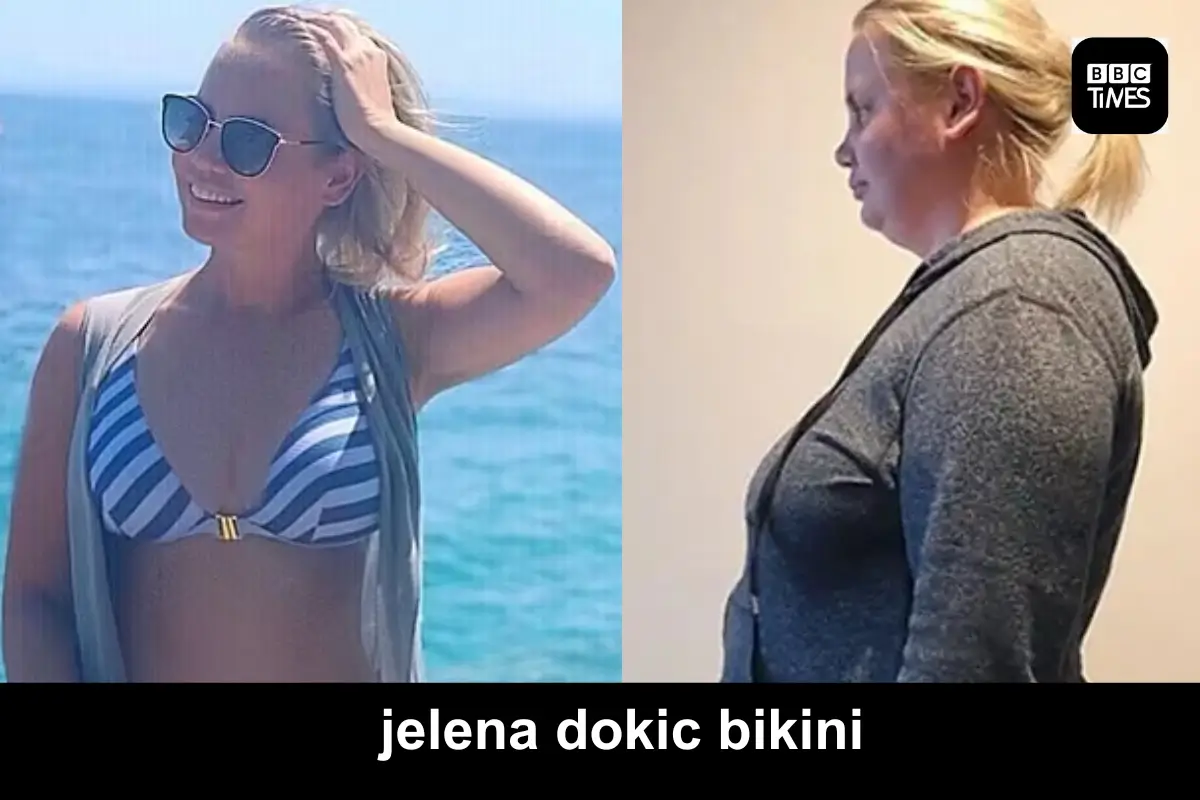
Much of the attention surrounding “Jelena Dokić bikini” is linked to her recent weight loss, which she has addressed openly and consistently. Dokić has confirmed that she lost approximately twenty kilograms over just under ten months, reducing her dress size from twenty to ten.
She has been clear on several points. The weight loss was not fast. It was not extreme. It was not the result of crash dieting. As speculation emerged online suggesting she may have used weight-loss medications such as Ozempic, she addressed the claims directly and publicly, denying the use of GLP-1 drugs and expressing frustration at assumptions that undermined her effort.
She explained that her routine involved discipline rather than shortcuts. She committed to regular training, including six-o’clock-in-the-morning gym sessions, while balancing workdays that often stretched to eighteen hours. She described stopping late-night eating and cutting out foods such as burgers, pizza, fries and desserts, not out of punishment, but because they left her feeling sluggish and unwell.
Health First, Weight Loss as a Byproduct
A central theme in Dokić’s messaging is her insistence that weight loss was not the goal. It was a byproduct of prioritising health.
In a side-by-side comparison post shared in March, she reflected on images of herself at different sizes and asked what the difference between them really was. Her answer was simple. Nothing except what could be seen on the outside. Her body size.
She wrote that she was happy in both pictures. She emphasised that she remained the same hardworking, generous, empathetic and resilient person regardless of her weight. Her decision to focus on health was influenced by a family history of diabetes and a diagnosis of high blood pressure, which prompted her to reassess long-term wellbeing rather than appearance.
“This is about health and not size,” she wrote, a phrase that Australian outlets repeatedly highlighted.
Criticism at Every Size
One of the most confronting aspects of Dokić’s story is her honesty about public cruelty. She has revealed that when she was heavier, she was subjected to relentless insults. She has spoken about being called “whale,” “cow” and “fat,” and about being asked what had “happened” to her body, as though it required explanation.
What surprised many observers was her admission that the criticism did not stop after she lost weight. Instead, it shifted. She described being accused of abandoning plus-size advocacy and of “jumping on diet culture,” a label she explicitly rejected. She stated that being healthier should not be framed as a betrayal of others.
“When I was a size 20 someone always complained and now that I am a size 10 someone is always complaining too,” she wrote. Her conclusion was blunt. “Nothing will ever be good enough for people, and that’s sad.”
Earlier Weight Changes and Long-Term Fluctuations
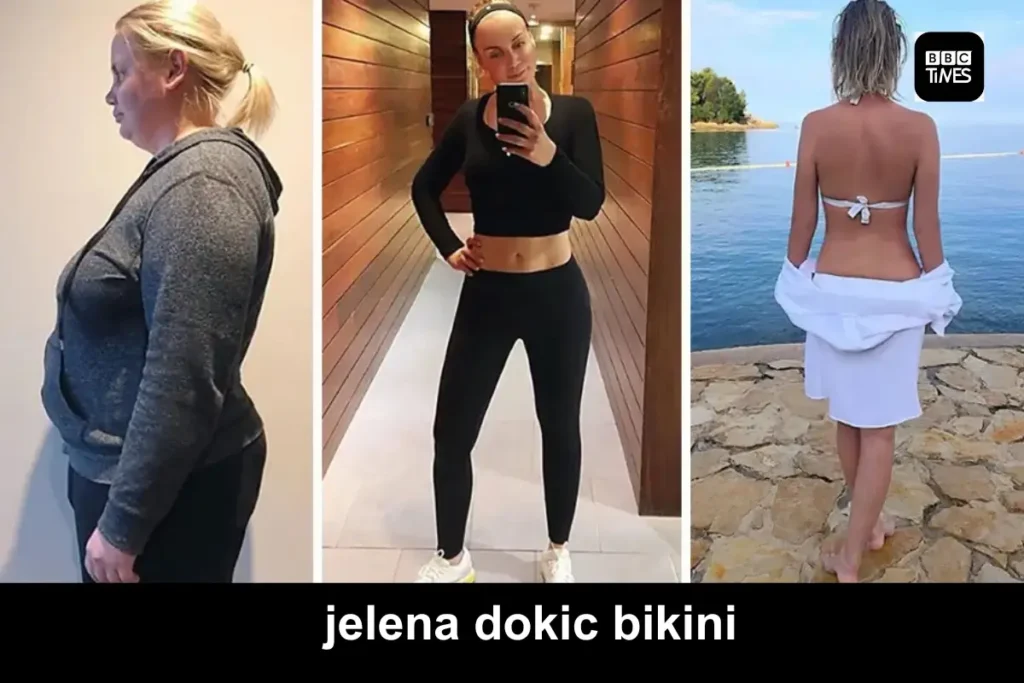
Australian reporting has also noted that this was not the first major weight change in Dokić’s life. In earlier years, she lost around forty-five kilograms after reaching close to one hundred and twenty kilograms at her heaviest. She has linked that period to emotional distress and using food as support.
This history places her current journey within a broader context. It reinforces her argument that health is not linear and that bodies change across different stages of life. It also challenges simplistic narratives that equate weight loss with success.
Mental Health, Food and Recovery
Dokić has spoken openly about living with an eating disorder for approximately two decades. She explained that food once became a coping mechanism during periods of trauma and stress. This context has been central to how Australian media frames her story, ensuring her weight loss is understood as part of recovery rather than a cosmetic transformation.
Her willingness to discuss mental health alongside physical change has reshaped how audiences interpret her bikini photos. They are not proof of discipline. They are markers of survival.
A New Chapter in Her Personal Life
In mid-2025, Dokić confirmed she had found love again with Melbourne-based hospitality operations manager Yane Veselinov. Sharing a photo of the pair, she wrote, “You are my calm, safe, peaceful and happy place. So glad I found you.”
Australian outlets treated the relationship not as celebrity gossip, but as part of a broader narrative of emotional stability and renewal after years of personal difficulty.
Why Australia Keeps Reading
The reason “Jelena Dokić bikini” remains a high-interest topic is not visual curiosity alone. It sits at the intersection of health, ageing, mental wellbeing, online cruelty and the scrutiny faced by women in public life. Australian media coverage reflects this complexity, focusing on meaning rather than spectacle.
Dokić’s bikini photos are not about proving she looks good after weight loss. They are about refusing to apologise for change, health or confidence at any stage of life. By attaching honesty and reflection to images that typically invite judgement, she has reshaped the conversation.
As she has urged her followers, people should learn to see souls rather than bodies. That message, more than any image, is why Australia keeps reading.
Conclusion
Jelena Dokić’s bikini photos are not moments of self-promotion or validation. They are part of a much larger, deeply personal story about survival, health and reclaiming identity after years of scrutiny. For someone who has spent most of her life judged on performance, appearance and expectations set by others, choosing to share these images on her own terms is an act of control rather than display.
What makes her story resonate across Australia is not the physical change itself, but the honesty that accompanies it. By speaking openly about weight fluctuations, mental health struggles, public cruelty and recovery, Dokić has challenged the idea that worth is tied to body size or public approval. Her insistence that weight loss was a byproduct of health, not a goal, reframes the conversation away from aesthetics and back to wellbeing.
In a media landscape that often reduces women to appearances, Dokić’s message cuts through: people are the same at every size, and judgement says more about the observer than the person being judged. Her journey reminds audiences that confidence is not found in transformation, but in self-acceptance. That is why her story continues to be read, shared and discussed not because of what she wears, but because of what she refuses to apologise for.
FAQs
What happened to tennis player Jelena Janković?
Jelena Janković, the former world No.1 from Serbia, retired from professional tennis due to ongoing injuries and physical strain. She has since stepped away from the tour and lives a private life, occasionally appearing at tennis-related events.
Why did Jelena Dokić retire from tennis?
Jelena Dokić retired from professional tennis due to a combination of injuries, mental health challenges, and the long-term impact of trauma experienced throughout her career. She later transitioned into broadcasting and advocacy work.
How much weight did Jelena Dokić lose?
Jelena Dokić has confirmed she lost around 20 kilograms over just under 10 months. She has emphasised that weight loss was a byproduct of improving her health, not the primary goal.
Does Jelena Dokić have health issues?
Jelena Dokić has publicly stated she was diagnosed with high blood pressure and has a family history of diabetes, which prompted her to prioritise health and lifestyle changes. She has also spoken openly about long-term mental health challenges.
What is the 3-3-3 rule for weight loss?
The 3-3-3 rule is a general wellness approach that encourages balanced habits, often referring to eating three meals, exercising three times a week, and focusing on three key health goals. It is not a medical or clinically proven weight-loss method.
Which tennis player joined OnlyFans?
Former tennis player Ashley Harkleroad publicly joined OnlyFans after retiring from the sport, using the platform for lifestyle and fitness-related content rather than professional tennis activity.
Who is the hottest female tennis player right now?
There is no official or objective answer to this, as attractiveness is subjective. Media and fan discussions often mention players like Emma Raducanu, Aryna Sabalenka, and Paula Badosa, but such labels reflect opinion rather than sporting achievement.
Why did Novak Djokovic cry after winning?
Novak Djokovic has cried after major wins due to emotional release, family support, personal sacrifice, or the significance of milestones. He has spoken openly about the mental and emotional toll of elite competition.