



Understanding the Courtney Morley Clarke Case
The killing of three-year-old Courtney Morley Clarke is among the most shocking and discussed cases in the realm of crimes in Australia. It was a tragedy that occurred on a hot summer evening in January 2001 at the Central Coast community of Point Clare in NSW, which would change the discourse of juvenile crime, psychology and community safety throughout the country. It is the full history of what happened to Courtney Morley Clarke, the progression of the case, and why it still proves fascinating to the Australians even today.
What Happened to Courtney Morley Clarke in 2001?
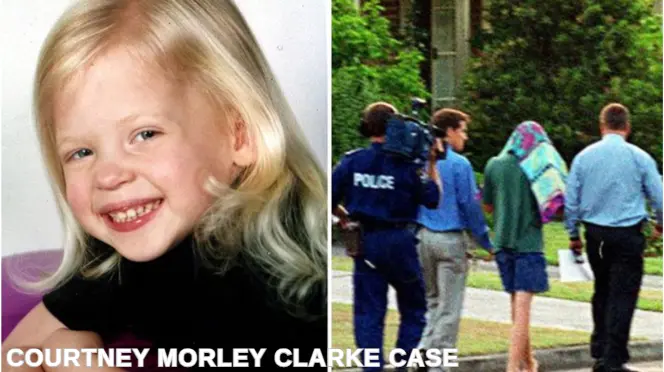
Courtney Morley Clarke was a three-year-old child who was put to bed in her home with her family, on Northwind Avenue, in Point Clare, in the NSW Central Coast, on January 28, 2001. She had been snuggled in by her parents, Tamara and Lawrence Morley-Clarke, at around 1 AM. The next morning at about 7 AM, however, the family woke up and Courtney was not in her bed. The door leading out of the house was open, and her tiny nightie was lying on the floor outside.
What occurred on that night was beyond imagination. A 13-year-old male, one of the neighbours living about 300 metres away, had sneaked out of his house during the night, walked to the bedroom of Courtney and dragged the sleeping toddler out of the bed. He would then take her over the road to an adjacent empty block and stab her to death with a steak knife through the heart. The assault was savage, strategic and purely unjustified.
Some time before 11 AM, the police found the body of the child in long grass outside her home, with only a nappy on her. At the scene, a bloodstained rock and a steak knife were discovered by police, evidence that would later lead to an arrest and confession.
Where Was Courtney Morley Clarke Found?
Courtney Morley Clarke was discovered in tall grass about 300 metres away on Northwind Avenue off the Point Clare, a small, quiet residential suburb in the NSW Central Coast. The fact that the place was very near her family home made the crime even more horrifying to the close-knit community.
The teenager made confessions in questioning by the police. He told police that “he stabbed her in the heart”, and even escorted the police to the crime scene himself. Upon the arrival of the police, they found the pool of blood lying in a driveway made of concrete and the weapon used to kill the child lying nearby. The body of the young victim was discovered in the nearby long grass that was within view of her parents’ bedroom window.
This physical proximity–that Courtney was murdered in such close proximity to the place where her family slept–was another horror to a crime that could not be understood.
The Killer Behind the Crime: Understanding Australia’s Youngest Murderer
The offender, who by law is known as SLD because of anonymity orders protecting his identity as a minor at the time of the crime and which protects his identity as a minor, was only 13 years and 10 months old upon committing murder, becoming the youngest convicted murderer in Australia. He was the adopted son of a family residing just across the street from the Morley-Clarkes and had been their neighbours in the past.
What is even more disturbing about this case is what psychological experts and psychiatrists later found out with respect to the mind of the teenager. During police questioning, the boy said that he would have found it easier to kill again in future since he had killed somebody. “He identified himself as a cold-hearted killer”, which was a shocking lack of remorse or even the realisation of the severity of his deeds.
According to the judge who sentenced him, Justice James Wood, the murder was one of the “most disturbing murders of a very young child and was completely unbearable and vicious.” The judge drew parallels to the James Bulger case in the United Kingdom when determining the sentence for the criminal and tried to draw parallels with the notorious James Bulger case.
The Trial and Sentencing: Justice for Courtney Morley Clarke
The teenage murderer confessed and was found guilty after giving in to tremendous evidence collected at the crime scene. He was finally sentenced to 20 years’ imprisonment in August 2002, some 19 months after the murder. This was such a severe sentence for one so young, just because the crime was so severe and shocking.
The trial was the most notable case in the criminal law of Australia concerning juvenile offenders. The case brought up some serious issues on the subject of criminal culpability, psychological evaluation among youth and the subject of extreme violent behaviour amongst adolescents. Psychiatrists who treated the teenager discovered him to be having severe personality disorders, which were characterised by a total lack of empathy and worrying narcissistic behaviours.
Life After Prison: The Extended Supervision Orders
The adult offender who had served 20 years in prison was released in 2021. But rather than either full release, the law enforcers used rare post-sentence detention orders, a legal tool that is only applied in the most severe situations when the offender remains an uncontrollable and intolerable threat to society.
The man was first released on an Extended Supervision Order (ESO), a high-risk offender conditional release program, in September 2023. Nevertheless, he was in the community for only one month. He faced re-arrest in October 2023 following the violation of the stringent provisions of his release after approaching and speaking to a woman with a young child at Bulli Beach near Wollongong. This was a direct breach of his ESO conditions, whereby he was not supposed to have any contact with children.
He later pleaded guilty to the breach of the extended supervision order and was given another 13 months of custody. By the time this sentence ends in December 2024, the NSW government will have tried to extend this detention to another 12 months, stating that he is still too dangerous to be integrated into the community.
Recent Developments and Current Status
In March 2025, the NSW Supreme Court Justice Mark Ierace ruled on an important case, which surprised many Australian people. Although SLD was acknowledged as posing a risk to the community, the judge held that he was not persuaded that the offender was an “unacceptable risk” of reoffending for a serious crime and ordered the government to withdraw its request to continue detaining him.
The decision implied SLD was put back under another extended supervision order, which lasts for a period of five years. This order has strict terms of his movements, a ban on the use of encrypted communication applications, and limitations on his places of living and working.
The ruling raised much controversy across Australia on criminal justice, rehabilitation and the safety of the community. A lot of Australians asked themselves whether a criminal who had such a violent record and was proven to be a person who cannot repent should be released into the community at any time in his life.
Why the Courtney Morley Clarke Case Matters to Australians Today
The case of the murder of Courtney Morley Clarke is still pertinent to modern Australian society for several vital reasons. First, it triggered nationwide debates on the appropriate age of criminal responsibility and the way the criminal justice system should treat children who commit serious crimes. Second, it brought out the drawbacks of rehabilitation and psychological evaluation in severe instances of juvenile violence.
The case is also a watershed moment in Australian true crime awareness, which resulted in growth in the populace interested in the psychology of criminals, forensic investigation, and the criminal justice process. The case is still being tackled with documentaries, podcasts and pieces of investigative journalism, which pose some underlying questions of what makes a young person take such a heinous step.
Conclusion: Remembering Courtney Morley Clarke
It is an unbelievably tragic and constantly complicated tale of Courtney Morley Clarke by the Australian justice system. The case of Courtney Morley Clarke and her teenage murderer reminds Australians that little children are vulnerable and that evil can be perpetrated by even the most unlikely suspect, even in small communities and in small suburban areas in the Central Coast of NSW.
Whether you are conducting a study of this serious Australian crime case, trying to gain an insight into the criminal behaviour of the juvenile or just looking into how the justice system of Australia deals with extreme cases, the case of Courtney Morley Clarke offers important details. The affected persons of this case or other crimes could seek assistance through Lifeline (13 11 14) or Beyond Blue (1300 22 4636).
Comments on this case and how Australia treats young offenders in terms of juvenile justice can be made below. What does the Courtney Morley Clarke case tell you about our legal system?