


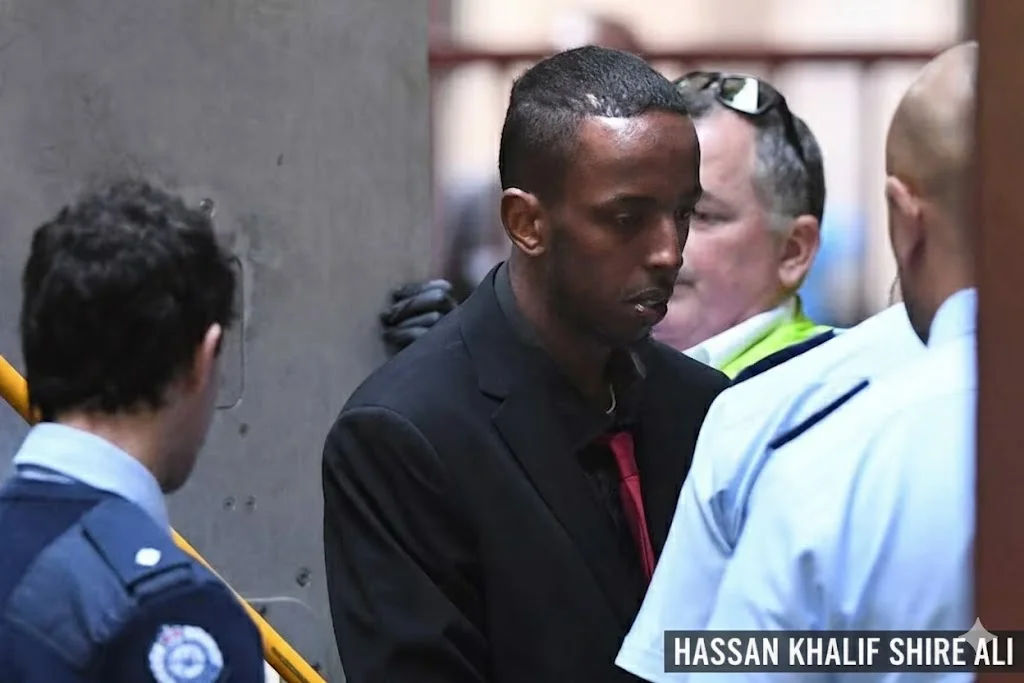
Bourke Street, the most popular street in Melbourne on a crowded Friday afternoon in November 2018, became a place of chaos and tragedy. The 30-year-old Somali-Australian male, Hassan Khalif Shire Ali, drove his ute full of gas cylinders in the centre of the city and set up a fire that did not explode as planned but still triggered a deadly stabbing spree. It is an incident that has left a mark on the history of Australia and led to the loss of one life and injury to two others, shaking the security of the nation. When considering the actions of Hassan Khalif Shire Ali and the consequences of the event, it is important that we comprehend what drove him to execute this ISIS-inspired attack and how this influenced the lives of our communities forever.
Early Life and Migration to Australia
Hassan Khalif Shire Ali, a Somali born and migrated to Australia with his family in the 1990s when terror was rife in their own country, and they fled to safety. He was brought up in the northern suburbs of Melbourne, where he studied at Al-Taqwa Islamic College, which is popular in the neighbourhood. His childhood years, by every measure, could be said to be common in most migrant families establishing a new life Down Under. He was married with a young son, but members of his family later narrated that he was battling mental illness and a drug abuse problem. Such personal difficulties, together with the delusions and agitation, were a picture of a man in distress long before the attack.
Stories such as those of Shire Ali in the Australian context point out the complications that immigrant communities have to grapple with. As an example, the Somali-Australians in Melbourne have been doing great work in business and community organisations, but as individuals such as him point out, there is a need to improve mental health services provided by taking into consideration cultural backgrounds.
Signs of Radicalisation and Missed Opportunities
The radicalisation of Hassan Khalif Shire Ali had been the cause of concern several years before the incident. He was suspected of going to Syria to join the Islamic State (ISIL) in 2015 when his passport was cancelled by the authorities. Although he was familiar with federal intelligence organisations, such as the Australian Security Intelligence Organisation (ASIO) and was a low-risk subject, the organisation was not monitored actively. This evaluation came to find favour later on in the coronial inquest.
Family members observed that he was growing more and more isolated and was exhibiting bizarre behaviour such as claiming to be being hunted by “unseen people with spears.” The further radicalisation concerns have a familial dimension when his brother, Ali Khalif Shire Ali, was arrested in 2017 because he planned to commit a mass shooting on New Year’s Eve at Federation Square. The inquest demonstrated that criminal behaviour had increased over the months preceding, with assaults and vehicle damage occurring, but nothing had been done to stop it, even in a traffic stop weeks before.
This also casts doubt among Australians on the counter-terrorism strategies. This is because in a multicultural country such as our country, it is important to find a balance between vigilance and communal confidence. Such vulnerabilities are the reasons why programs such as deradicalisation programs in Victoria are aimed at, but the case of Hassan Khalif Shire Ali reveals gaps that require filling.
The Day of the Attack: Chaos on Bourke Street
Hassan Khalif Shire Ali crashed his Holden Rodeo ute outside the Bourke Street in Swanston and Russell Streets on 9 November 2018, at approximately 4.20 pm. He poured gasoline into the car that he was setting on fire, hoping the propane gas cylinders would blow up; however, they did not. Appearing out of flames, he had a big knife in his hand and stabbed three pedestrians in a 19-second frenzy.
Passers-by were displaying exceptional Aussie spirit: one of them attempted to run over him with a shopping trolley, and others helped to save the injured. He was confronted by two officers of the Victoria Police with their batons and pepper spray, and shot in the chest by one of them as he lunged at him. Shire Ali was suppressed and subsequently died in a hospital. The assault was promptly branded as ISIS-inspired terror.
Victims, Heroes, and Community Response
It was a tragedy as it took the life of a 77-year-old Sisto Malaspina, a beloved co-owner of Pellegrini, Espresso Bar, who was stabbed in the attempt to assist. One of the 58-year-old Tasmanian businessmen was injured, and one of the 24-year-old Hampton Park security guards was also injured. On 19 November, Malaspina was given a state funeral, and thousands gathered, and tributes came in as far as Australia was concerned. A memorial plaque is now placed outside his cafe, which acts as a poignant reminder to Melburnians.
There came heroes, as well, the bystanders, such as Rod Patterson, who was stabbed in the attempt to intervene, and the police officers who thought rapidly enough to be praised by the coroner. The community came out in true Australian style with flowers and messages of support and condolences to the families of the victims.
Investigation and Inquest Findings
The collaborative counter-terrorism investigation between Victoria and the Australian Federal Police substantiated the attack as a premeditated one with the motive of Islamic extremism. This was supported by the fact that Shire Ali had in his car such items as religious papers on Islam and interfaith “kufr”. A coronial inquest in 2021 by Judge John Cain ruled that police use of lethal force was reasonable; however, it identified potential missed prospects in intelligence sharing and threat evaluation.
The families and the victims have sued the Victoria Police, demanding that they take responsibility. The results have affected Australian policies, where the importance of better follow-ups on at-risk individuals is highlighted.
Broader Implications for Australian Security
The deeds of Hassan Khalif Shire Ali led to the establishment of a discussion on the topic of terrorism, mental health, and migration throughout the country. Bollards were also installed in Bourke Street in Victoria to deter vehicle attacks and improve the safety of the people in the crowded locations. On a national level, it helped focus on how extremism intersects with the lack of personal security and resulted in the reassessment of deradicalisation efforts.
To ordinary Australians, it is a lesson of perseverance. Such occurrences, though being just a few instances in the country, highlight the need to be more community aware of watching out in case of suspicious behaviour and reporting the same to law enforcement mechanisms such as the National Security Hotline.
To sum up, the account of Hassan Khalif Shire Ali is a tragedy, radicalisation, and missed cues, as well as courage and solidarity. It is time to make inclusive communities, as Melburnians keep on celebrating Sisto Malaspina and assisting affected families. When you observe the symptoms of radicalisation or mental challenges in a person, contact such services as Lifeline (13 11 14) or the National Security Hotline (1800 123 400). Keeping in touch and being connected is one way of ensuring that Australia is safe.