



Even though Schapelle Corby’s name has been in every Australian home for twenty years, her narrative nevertheless has a lasting impact on the country. In October 2004, a young woman’s trip to Bali turned into one of Australia’s most talked-about criminal cases in recent memory. Debates about justice, corruption, police shortcomings, foreign diplomacy, media ethics, the decrease in mental health among inmates, and Australia’s precarious relationship with Indonesia were sparked by it.
The case expanded beyond a single arrest as the years passed. Televised courtroom scenes, emotional pleas, conflicting legal interpretations, the glaring disparities between Indonesian and Australian justice, political interventions, public demonstrations, book deals, changing media attention, and ultimately her peaceful return to Australian life all contributed to its development as a cultural flashpoint.
Corby now focuses on epoxy painting, blood donation, travel, family, and personal rehabilitation while living a simple life in Queensland. However, her identity is still inextricably linked to the pain she experienced, the shadow of Kerobokan Prison, the global headlines, and the public’s disagreement about guilt or innocence. Australia is still examining the case that captivated the country twenty years later. The arrest, trial, years of incarceration, appeals, remissions, parole terms, eventual deportation, and the person she has become twenty years later are all covered in detail in this piece.
Early Life & Family
Schapelle Leigh Corby was born on 10 July 1977 in Tugun, Queensland, into a large and close-knit Australian family. She grew up on the Gold Coast with her siblings, including her sister Mercedes, who would later become one of the most visible supporters during her legal ordeal in Indonesia. Her parents, Michael Corby and Rosleigh Rose, separated when she was young, but both played significant roles in her upbringing. Corby’s childhood was largely ordinary, shaped by local schools, part-time work and a love of the beach. Before her arrest, she studied beauty therapy and worked various jobs while travelling between Australia and Japan, where she spent time teaching English. Friends described her as quiet, warm-natured and family-oriented, far removed from the global attention that would later surround her.
Her family’s life changed dramatically when she was arrested in Bali in 2004. Her mother and sister became central figures in media coverage, fighting publicly and emotionally for her innocence. Mercedes, in particular, was relentless in interviews and advocacy campaigns, becoming Schapelle’s loudest defender while also navigating intense public scrutiny. Despite the pressure, the family remained united, and their continued support has shaped Corby’s return to Australian life after her release. Today, she lives with her mother, Rosleigh, in Queensland, maintaining a quiet routine far removed from the glare of national headlines.
The National Sensation-Signaling Arrest
Schapelle Leigh Corby, a 27-year-old beauty school student at the time, travelled from Brisbane to Denpasar Airport on October 8, 2004, in order to see her sister Mercedes in Bali. Until Indonesian customs officials requested to check her bags, her arrival seemed to be unremarkable. Authorities at the airport found 4.1 kilogrammes of plastic-wrapped cannabis in her bodyboard luggage.
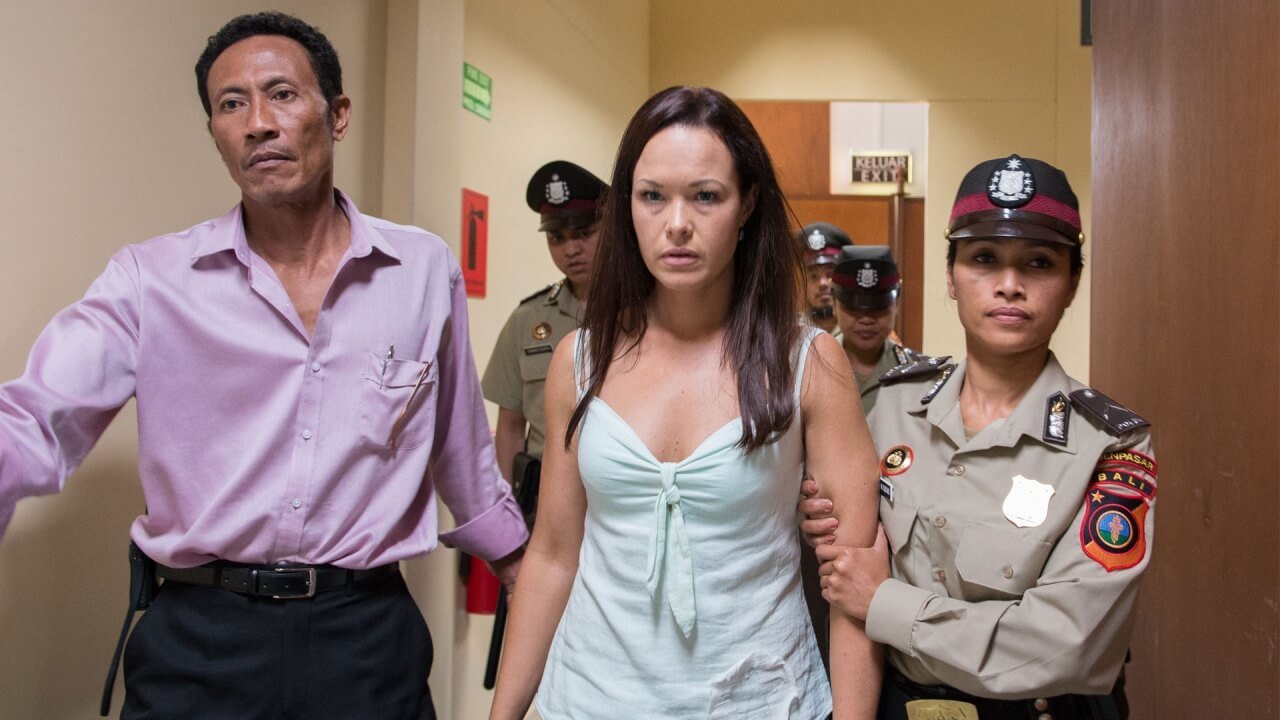
Corby said she was unaware of the item in her suitcase and argued right once that the narcotics had been put. She was arrested and questioned within hours under Indonesian law, which many Australians were not acquainted with. It was an instantaneous and explosive response. The story quickly spread across major networks at a period when Bali was one of the most popular tourist destinations for Australians. Some of the most moving and devastating footage that was shown on Australian television was of Corby crying, trembling, and clinging to her mother’s arms.
While Indonesian authorities insisted that Corby intentionally smuggled the cannabis, Australian pundits conjectured about baggage-handling syndicates that operate at Australian airports. Widespread rumours that domestic criminal organisations may have taken advantage of inadequate airport security arose from questions about whether the narcotics came from airports in Sydney or Brisbane.
The Bali judicial scene swiftly descended into chaos. As Indonesian authorities tried to keep the peace, camera operators, reporters, and foreign media outlets descended upon the scene. Later, senior journalist Mark Burrows referred to the setting as “a circus,” saying that news teams from all over the globe competed for a spot and handled every hearing as if it were a major worldwide story.
According to AC Nielsen polls, Australians were almost equally divided during the peak of popular interest. About 40% of respondents thought Corby was innocent, a sizable portion thought she was guilty, and many were still unsure. This degree of divide has never been seen in international criminal prosecutions involving an Australian.
The Public Division, the Trial, and the Unfamiliar Indonesian Legal Framework
Australians tried to comprehend the harshness and structure of Indonesia’s legal system, which became the main topic of public discussion. In Indonesia, drug offenses—including the trafficking of cannabis—carry very severe punishments, ranging from long incarceration to the death sentence.
Investigators should take into account Australian police information that domestic baggage-handling staff were being investigated at the time for transferring cannabis between cities, according to Corby’s legal team, who contended that the narcotics had been planted. They said that her case had not been evaluated in accordance with the most fundamental evidential chain-of-custody norms.
However, Indonesian prosecutors persisted, citing the weed as unmistakable evidence. They maintained that any foreign national found in possession of significant amounts of narcotics must be subject to Indonesia’s stringent legal system. Tension around the case increased as it became clear that the two countries’ cultures and legal systems did not mesh well.
Corby seemed scared and unprepared, according to Mark Burrows, who covered the trial in great detail. Burrows also noted that her fragility contributed to the public’s compassion. He then said that he personally thought Corby “did do it,” not because he was hostile to her but rather because of specifics he saw throughout the trial. He did admit, however, that the great majority of Australians in attendance had never dealt with Indonesia’s legal system before and found it difficult to comprehend how swiftly a person’s destiny could be decided in a foreign court.
One of the most iconic pictures of the decade was the broadcast response of Corby fainting during proceedings.
Appeals, Sentencing, and Emotional Shock
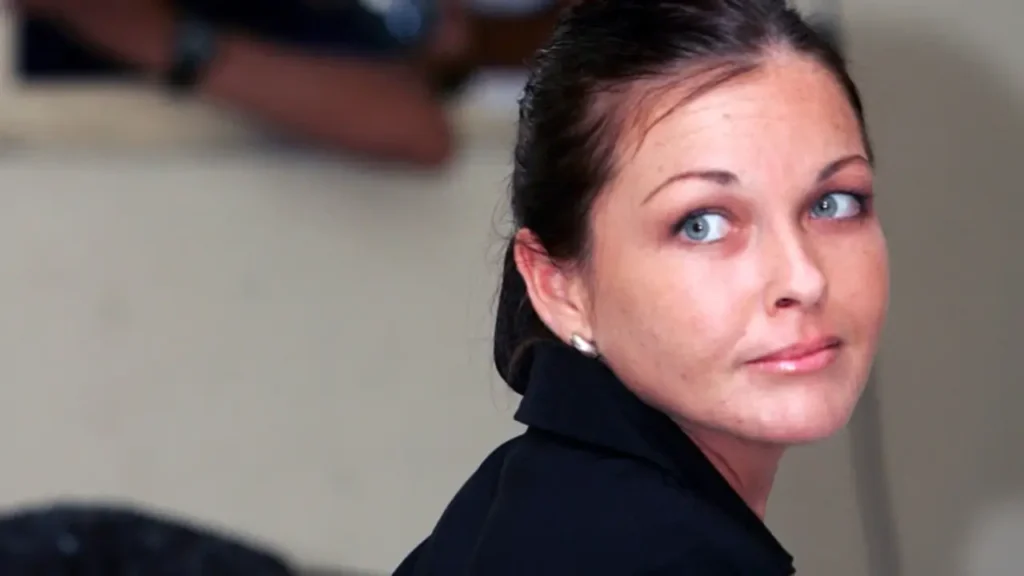
Schapelle Corby was detained for seven months before receiving a 20-year jail term in May 2005. In Australia, the public’s response was swift and strong. Many were heartbroken and thought the penalty was severe. Others thought she avoided the death sentence, which was still an option for drug trafficking in Indonesia.
Journalists often asked Australian foreign ministers and prime ministers about Corby’s situation, but authorities insisted that they had to respect Indonesian sovereignty.
Her sentence was once lowered to fifteen years when her legal team attempted appeals. However, the first twenty-year sentence was eventually confirmed by an Indonesian court review. Her mental health was severely strained by the frequent changes, and it eventually became well known that Corby had extreme sadness, anxiety, paranoia, and panic attacks while there.
Inside Kerobokan Prison Life
Corby spent nine years incarcerated in Bali’s Kerobokan Prison, which is well-known for its harsh heat, corruption, overcrowding, inadequate sanitation, and frequent violent outbursts. She suffered the psychological strain of Indonesian prison culture while living in small, hot cells with scores of other prisoners.
Her book, which was published as My Story in Australia and No More Tomorrows abroad, described her mental breakdowns, the cramped, oppressive quarters, terrifying times, dismal thoughts, and intense anxiety. She explained how her mental stability was damaged by the ongoing monitoring and uncertainty of jail life.
Her story showed a lady fighting for her life on both an emotional and physical level.
By tweeting pictures of her book covers in 2025, Corby made a rare public allusion to this time, emphasising how vulnerable she was while incarcerated. As she awaited trial, she seems scared and alone behind bars on the 2006 international cover. Her captivity is still inextricably linked to her identity twenty years later, as seen by the Australian version, which shows her standing in a flowery blouse in front of Kerobokan’s barbed wire walls.
Parole, Remissions, and Ongoing Legal Issues
On national holidays, prisoners may be eligible for periodic sentence reductions under Indonesian law. On important occasions like Christmas and Independence Day, Corby saw many remissions. Her necessary jail term was progressively reduced as a result of these reductions.
After serving nine years in jail, she was eligible for release in February 2014. Strict requirements were attached to her release: she had to reside in Bali, see parole officials on a regular basis, stay out of problems with the law, avoid media appearances, and stay in Indonesia until May 27, 2017.
Because of these limitations, her independence was restricted, and officials kept a careful eye on her while the world’s media continued to track her whereabouts.
Parole, Release, and the Stunning Return to Australia
After being formally granted parole in 2014, Corby lived in peace and quiet in Bali for three years while being closely watched. She was scheduled to be deported in 2017 after her parole expired. To dodge a large group of reporters waiting to record her departure, Corby abruptly changed her flight in an unprecedented PR move.
She ended her thirteen-year adventure overseas by leaving via a non-public airport area upon arrival in Brisbane to evade cameras, vanishing from public view.
A New Life in Australia: Personal Recovery, Stability, and Art
Schapelle Corby, now 47, resides in the Logan region of Queensland with her dog Lucielle and mother Rosleigh Rose. She prefers to concentrate on reestablishing her mental health rather than discussing her incarceration in public.
She has a small epoxy art company and makes resin clocks with seaside themes, often embellished with seashells and deep blue paint. These paintings have gained popularity among followers who value her artistic expression and usually fetch around $85.00.
Corby also takes use of her fame by charging around sixty dollars for individualised video greetings using Cameo. Fans often commend her for her charity in spite of all that happened to her; others call her “amazing” for wanting to promote kindness after going through such adversity.
She has started giving blood to the Australian Red Cross in recent years and often urges her fans to do the same. After years of captivity and monitoring, she periodically travels and shares vacation photos, expressing a wish to enjoy regular life.
Celebrating the Arrest’s 20th Anniversary
Australia celebrated the twentieth anniversary of Corby’s arrest in 2024. Former reporters who covered her trial offered fresh viewpoints, and media outlets reexamined the case.
According to Mark Burrows, Corby’s arrest caused one of the largest international media frenzies he had ever seen. He said that since she was clearly upset throughout the court procedures, many Australians felt sorry for her. While some thought she had been set up, others thought Australian airport security had failed.
Even after twenty years, the case’s cultural significance has not diminished. Many Australians can still clearly recall their precise location when the video of her sobbing in court first aired.
Cultural Influence, Public Disagreement, and the Story’s Durability
Australian perceptions of foreign travel and judicial systems were altered by the Corby case. It underlined the serious repercussions of drug trafficking in Indonesia as well as the dangers Australians encounter when travelling to nations with strong anti-drug regulations. It also brought to light the moral dilemmas associated with media overload, particularly when the subject of the coverage is a young, defenceless, and unskilled individual.
As the case is introduced to newer generations, it is often revisited in documentaries, news specials, podcasts, and articles. Interest has been rekindled by true-crime culture, and conversations about evidence, corruption, and unresolved issues are still sparked by Corby’s persistent insistence on her innocence.
In Australian cultural memory, the poignant pictures of her begging and fainting in court are still deeply embedded. Her narrative persists because it depicts more than simply a criminal case; it captures the collision of the legal systems of two countries, the powerful influence of the media, and the vulnerability of a single person torn between them.
Net Worth Estimate
According to one source, as of 2025 her estimated net worth is approximately A$500,000. Some earlier reports suggested amounts higher, but those figures often include potential earnings rather than verified income.
Important Financial and Legal Notes
- Whilst rumours circulated that Corby could command up to several million dollars for a tell-all interview following her release, legal experts pointed out that under Australia’s criminal proceeds legislation she may not retain all such earnings if they are tied to her notoriety rather than legitimate work.
- A 2009 court order froze around A$128,800 which had been generated from her 2006 autobiography My Story (international edition No More Tomorrows) and related media, under laws preventing convicted persons from profiting from crime.
What This Means
Given the legal constraints, the modest-sounding net worth reflects the fact that much of the potential high-earning opportunities may have been restricted or frozen. Her earnings from art, small business ventures and cameo messages likely contribute to the estimate, but major media deals appear either constrained or speculative.
Schapelle Corby Timeline: Key Events (2004–2025)
- 8 October 2004 – Schapelle Corby arrives at Denpasar Airport for a Bali holiday. Customs officers find 4.1 kg of cannabis in her bodyboard bag. She insists the drugs were planted. She is taken into custody and interrogated.
- Late 2004 – The case explodes across Australian media. Footage of Corby crying and shaking becomes one of the most replayed images on national television. Journalists and TV crews flood Bali.
- Early 2005 – Corby’s trial begins. The courtroom is packed with reporters as Indonesia’s harsh drug laws shock Australians. The case becomes a global media event.
- May 2005 – Corby is sentenced to 20 years in Kerobokan Prison. She collapses when the verdict is read. Australia reacts with outrage, division and disbelief.
- 2006 – Corby releases her autobiography My Story. The international edition, No More Tomorrows, uses a photo of her behind prison bars, emphasising her vulnerability.
- 2007–2010 – She serves time inside Kerobokan Prison, experiencing overcrowding, extreme heat, corruption and severe mental health decline including depression and anxiety.
- 2010–2013 – Corby’s lawyers pursue appeals. The sentence briefly drops to 15 years before being reinstated to 20. She receives various Indonesian holiday remissions that slowly reduce her remaining term.
- February 2014 – Corby is released on parole after nine years in prison. She must remain in Bali for three years, avoid the media, report regularly to authorities and follow strict conduct rules.
- 2014–2017 – She lives quietly in Bali under parole supervision. Media interest remains high, but she complies with restrictions to avoid violating parole terms.
- 27 May 2017 – Corby’s parole ends. She is deported to Australia. In a dramatic move, she switches flights to avoid media, then exits Brisbane Airport through a private route to evade cameras.
- 2018–2023 – Corby rebuilds her life in Queensland. She begins making resin art, selling ocean-style epoxy clocks. She creates paid Cameo videos and becomes a regular blood donor with the Australian Red Cross.
- 2024 – Australia marks 20 years since the arrest. Media across the country revisit the case. Journalist Mark Burrows describes the original trial as “a circus” and recalls the enormous public division at the time.
- April 2025 – Corby makes a rare reference to prison life by reposting the covers of her autobiography. She reaffirms she still claims innocence, and that the trauma of prison remains part of her story.
- 2025 (Present) – Corby lives quietly in Logan, Queensland, with her mother Rosleigh and her dog Lucielle. She focuses on art, travel, family and mental wellbeing while remaining one of the most recognisable—and debated—figures in modern Australian history.
Conclusion
Schapelle Corby has built herself a peaceful, secluded, and artistic life for herself twenty years after the arrest in Bali that transformed her life. This is a far cry from the intense limelight that formerly surrounded her. She has recreated her world via art, family, travel, blood donation, and perseverance, even if the shadow of Kerobokan Prison will always be a part of who she is.
Her tale, which symbolises terror, tenacity, legal complexities, split public opinion, and cultural reflection, is still among the most profoundly etched in Australian history. The tragic story of Schapelle Corby serves as a reminder of how one incident—a luggage check at an airport in a foreign nation—can change a person’s life. It still has resonance because it captures not only a court case but also a larger Australian dialogue about empathy, justice, and the perils of being torn between two cultures.
FAQs
What books has Schapelle Corby written?
Schapelle Corby is the author of My Story, published in 2006, which details her life before the arrest, the Bali trial, and her experience inside Kerobokan Prison. The international edition was titled No More Tomorrows and featured a different cover highlighting her vulnerability during incarceration.
Where is Schapelle Corby now?
As of 2025, Schapelle Corby lives quietly in Logan, Queensland, with her mother, Rosleigh, and her dog, Lucielle. She focuses on epoxy art, occasional paid Cameo videos, travel and maintaining her mental wellbeing away from public life.
What is Schapelle Corby doing in 2025?
In 2025, Corby continues to run her small epoxy art business, selling ocean-themed resin clocks and home décor. She donates blood regularly, shares travel moments online and enjoys a mostly private life while still being one of Australia’s most recognisable former inmates.
Is there a Schapelle Corby documentary on Netflix?
There is no Netflix-produced documentary specifically dedicated to Schapelle Corby. However, she has been featured in multiple Australian documentaries, news specials, and true-crime programs revisiting the 2004 Bali arrest and the global media attention that followed.
What is Schapelle Corby’s net worth in 2024?
Estimates suggest Schapelle Corby’s net worth in 2024 was around A$500,000. Earlier higher estimates were largely speculative. Due to proceeds-of-crime laws, she could not legally profit from her criminal notoriety, meaning most income comes from legitimate work like art sales and Cameo videos.
Who is Schapelle Corby’s brother?
Schapelle Corby’s brother is Michael Corby Jr. He was mentioned throughout media coverage during her trial, and like other family members, supported her through the appeals, sentencing and parole period in Indonesia.
When was Schapelle Corby released?
Schapelle Corby was released on parole in February 2014 after serving nine years in Kerobokan Prison. She remained in Bali under strict conditions until May 2017, when she was officially deported back to Australia and allowed to rebuild her life.
Has Schapelle Corby appeared in any movies?
While Schapelle Corby has not starred in any movies, her case inspired numerous documentaries, telemovies and dramatised news specials. She was indirectly portrayed in various true-crime programs that explored the Bali arrest, trial, and public debate surrounding her guilt or innocence.