


Sydney is frequently celebrated as a city of stunning natural beauty, from its famous harbor to its golden beaches. Yet beneath this idyllic landscape, a far darker reality has been unfolding. Recent months have seen a frightening resurgence of gangland-style violence in Western Sydney, marked by targeted assassinations, revenge shootings, and public attacks that endanger innocent communities. What once seemed like fading remnants of past underworld conflicts has returned with unprecedented force, more fractured, ruthless, and unpredictable than ever before.
The killing of Dawood Zakaria became the flashpoint that exposed deep cracks within the criminal networks operating across the city. This single act of violence opened the door to a chain of attacks, retaliations, and power struggles that now grip Sydney’s criminal landscape. In response, NSW Police launched Taskforce Falcon, a massive unified strike operation aimed at dismantling the city’s most powerful underworld players.
This blog explores the murders, the feuds, the emerging youth gangs, the technological evolution of organized crime, the deep psychological toll on communities, and the future challenges facing Sydney as it attempts to contain a new era of gang warfare.
The Murder of Dawood Zakaria
The assassination of Dawood Zakaria marked a turning point in Sydney’s criminal history. Zakaria, an underworld figure with links to the powerful Alameddine network, was shot multiple times in a brazen daylight attack while waiting at a traffic light in Granville. A solicitor traveling with him was also critically injured. Zakaria died days later in the hospital, leaving behind a wave of fear and suspicion.
Police investigators quickly realized the killing was not an isolated incident but part of a strategic, internal power struggle. It revealed emerging cracks within the Alameddine network and intensified tensions with rival gangs seeking control over drugs, weapons, and territory. His murder didn’t just eliminate one man — it triggered a new and volatile era of underworld violence.
The Birth of Taskforce Falcon
Zakaria’s murder was the catalyst for the creation of Taskforce Falcon, one of the largest coordinated policing operations in New South Wales history. More than 150 officers from various specialist divisions were brought together to track, intercept, and dismantle crime syndicates involved in the escalating violence.
One of the early breakthroughs came when officers discovered a “kill car,” a specially prepared vehicle used for targeted assassinations. These vehicles were typically stolen or fitted with cloned plates, equipped with concealed weapons, and later burned to destroy evidence.
Taskforce Falcon’s mission became clear: identify the masterminds behind the killings, intercept new plots, and bring stability to communities shaken by the violence. Yet as more arrests were made, the scale of the criminal operations proved even larger than expected.
Feuds Within the Underworld
The Alameddine crime network, once considered unified, now appears fractured into competing internal factions. One wing, known as “Ready 4 War,” has long been associated with large-scale drug distribution. Another faction, “KVT,” is believed to draw heavily from Pacific Islander youth and has been rapidly expanding its influence.
These groups, previously aligned, are now believed to be fighting one another for dominance. Their feud has led to multiple shootings, arson attacks, and public standoffs. Vehicles have been torched in symbolic displays of power, and surveillance footage shows key members frequently changing hideouts. Loyalties have shifted, alliances have collapsed, and younger operatives have been thrust into the front lines of the conflict.
This is not the underworld of old. It is younger, more aggressive, and far more unpredictable.
The Emergence of G7
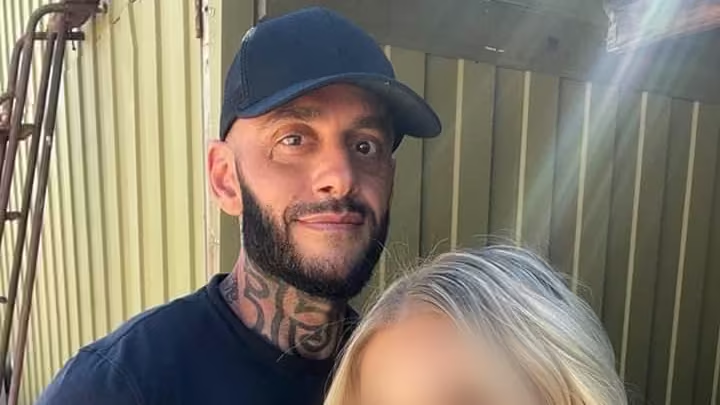
Amid the chaos, a new group known as G7 has become a significant player. This youth-based gang, with many members in their late teens, has been linked to multiple shootings, vehicle torchings, and violent robberies. Police allege that established crime families may be using G7 as hired muscle, subcontracting violent tasks to avoid implicating high-ranking figures.
The group’s rapid rise highlights a dangerous trend: older crime bosses are outsourcing violence to younger, more impressionable recruits who are willing to take extreme risks for money, status, or belonging. The involvement of teenagers in such organized criminal activities further complicates the law enforcement landscape and raises urgent social concerns.
The Killing of Suman Mokhtarian
The murder of former MMA fighter Suman Mokhtarian sent shockwaves across Sydney. Mokhtarian survived a previous assassination attempt outside his gym, where a gunman disguised as a delivery rider opened fire. The attackers operated with tactical precision and escaped swiftly.
Months later, Mokhtarian was shot dead in another coordinated attack. A red vehicle was seen fleeing the scene, and a white van was later found burning a classic underworld tactic to destroy evidence. Police suspect Mokhtarian became entangled in a “drug rip,” allegedly crossing a powerful faction within the Alameddine network. His killing emphasized the ruthlessness with which Sydney’s underworld handles betrayal.
The Return of Professional Killers and Kill Cars
One of the most disturbing aspects of the recent violence is the return of professional assassination tactics. “Kill cars” have become common once again vehicles altered for murder missions, often carrying fuel cans, masks, weapons, and cloned number plates before being torched.
Professional hit crews appear to be operating at a higher level of sophistication than ever before. They conduct surveillance missions, use multiple vehicles to confuse investigators, and rely on encrypted communication that is nearly impossible to trace. Younger members, familiar with digital tools, have become valuable assets in these operations. This marks a chilling evolution in Sydney’s criminal underworld, one that blends old warfare methods with modern technology.
The Role of Technology in Modern Gangland Operations
Technology has transformed Sydney’s underworld into a highly coordinated digital ecosystem. Encrypted apps allow crime leaders to issue orders without fear of interception. Burner phones, cloned SIM cards, and overseas servers make it harder for law enforcement to map communication trails. GPS trackers are used to monitor targets, while cloned number plates and fake identities help criminals move undetected. Some gangs even use drones to monitor police activity.
This digital sophistication has forced authorities to adapt quickly. Criminals now operate like businesses, using technology to streamline operations and evade surveillance. The shift has widened the gap between traditional policing and modern organized crime, creating a new battlefield where digital intelligence is just as crucial as physical force.
The Psychological Toll on Families and Youth
Behind every crime statistic lies a human story. Families across Western Sydney are experiencing tremendous emotional strain as young people become increasingly drawn into underworld gangs. Many parents report changes in their children’s behavior: sudden secrecy, unexplained wealth, and involvement with dangerous peers. These signs often leave families feeling helpless and terrified.
Communities living near gang hotspots face nightly anxiety. The sound of cars speeding through streets, rumors of retaliation attacks, and the fear of stray bullets have created an environment where people are constantly on edge. The trauma affects siblings, children, and elderly residents who feel unsafe stepping outside after dark. The psychological wounds left by this era of violence may last for decades.
The Future of Sydney’s Underworld and Policing Challenges
Sydney’s underworld is becoming more fragmented, more violent, and more unpredictable. As established families splinter and younger gangs rise, power struggles are likely to intensify. Law enforcement faces immense challenges, with criminals using encrypted messaging, cryptocurrency, drones, and global networks to operate with near invisibility.
The future depends on a balance of strong policing, advanced digital intelligence, and meaningful community intervention. Youth diversion programs, mentorship initiatives, and education opportunities must be strengthened to break the cycle of criminal recruitment. Without this dual approach, Sydney risks being drawn into a long-term conflict that could destabilize entire communities.
Conclusion
Sydney stands at a critical crossroads. The wave of underworld violence from the murder of Dawood Zakaria to the execution of Suman Mokhtarian reveals a criminal landscape undergoing dramatic transformation. Younger, tech-savvy gangs are rising, professional hit crews are resurfacing, and community fear is at its highest point in years.
Taskforce Falcon represents a powerful response, but the fight will require more than arrests and raids. Lasting change will come from a combination of proactive policing, advanced technological intelligence, legislative reform, and community-centered support.
The struggle for power may be taking place within the shadows of Sydney’s streets, but its impact is being felt in homes, schools, and neighborhoods across the city. The next chapter depends on whether Sydney can confront this threat head-on with unity, vigilance, and an unwavering commitment to safeguarding its future.
FAQs
What is causing the rise in Sydney’s underworld murders?
The rise is driven by internal gang feuds, power struggles within the Alameddine network, the emergence of youth gangs like G7, and increasing use of professional hit crews and kill cars.
Who was Dawood Zakaria and why was he targeted?
Dawood Zakaria was connected to Sydney’s underworld and the Alameddine network. Police believe his killing was part of an internal power struggle and a series of retaliation attacks.
What is Taskforce Falcon?
Taskforce Falcon is a major NSW Police operation created to dismantle Sydney’s violent crime gangs, intercept planned hits, track kill cars, and arrest high-risk offenders.
Why are teenagers getting recruited into Sydney gangs?
Teenagers are lured by fast money, social status, and a sense of belonging. Youth gangs are being used by older criminals for high-risk tasks such as shootings and drug runs.
How has technology changed gang operations in Sydney?
Organized crime groups now use encrypted apps, burner phones, cloned plates, cryptocurrency, and GPS tracking to plan killings and avoid police detection.
What impact does gang violence have on local communities?
Communities experience fear, trauma, anxiety, and constant risk of public shootings. Families worry about youth recruitment and increased criminal activity near homes.
Is Sydney’s gang violence expected to worsen?
Experts warn it may escalate due to faction splits, emerging youth gangs, and advanced criminal tactics unless policing, technology, and community programs intensify.