




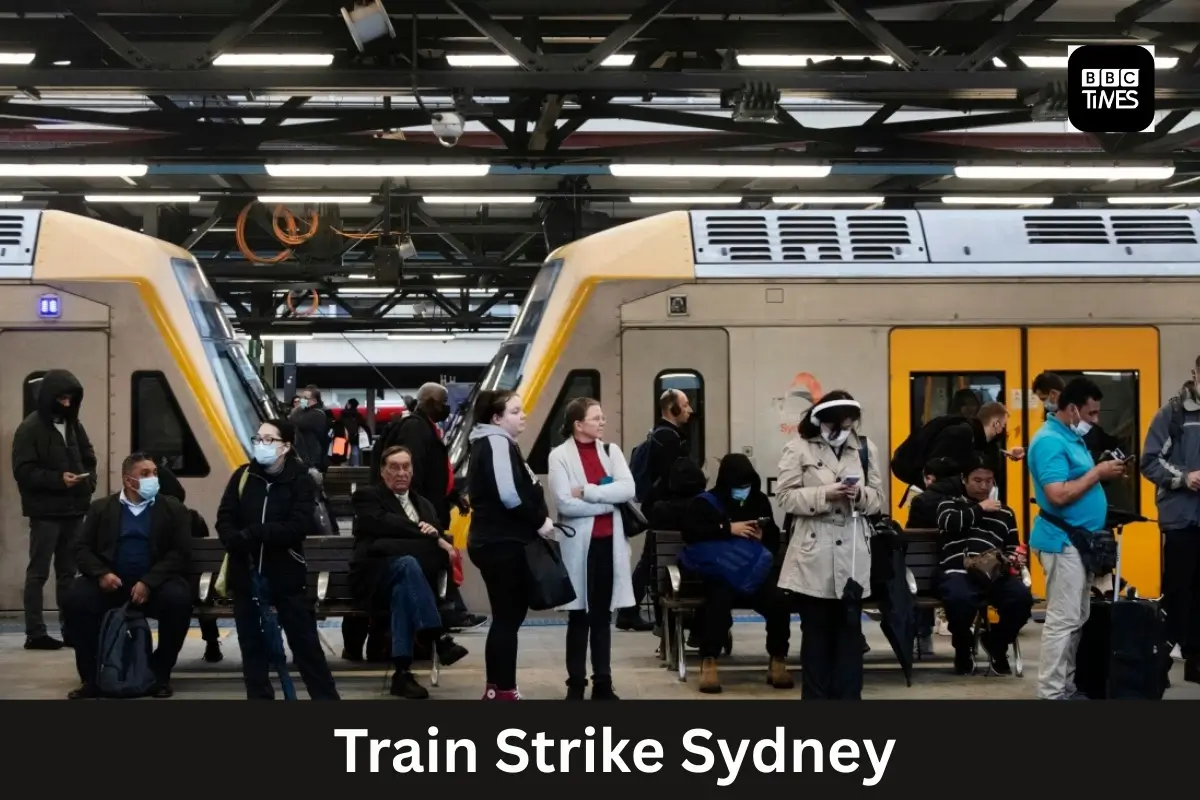
One of the pivotal moments in Sydney’s transport history is the 2025 train strike. Due to an ongoing disagreement between the NSW Government and unified rail unions, commuters in Sydney have been dealing with an unreliable and interrupted train service for months. What began as a salary issue has developed into a complicated battle that impacts thousands of commuters’ everyday lives in addition to the workers. This blog will take you through the history of the Sydney train strike, the reasons for it, the main demands made by the unions, and how it affected those who depend on Sydney’s rail system.
Expired Agreement and Increasing Tensions at the Outset of the Sydney Train Strike
When the rail workers’ enterprise agreement expired in May 2024, the Sydney train strike officially started. Sydney’s train workers’ pay, working conditions, and other important employment issues were determined by this agreement. Negotiations between the united rail unions and the NSW Government started after this agreement expired. Major heavyweights like the Electrical Trades Union (ETU) and the Rail, Tram and Bus Union (RTBU) are among the unions who have called for a 32% salary increase over four years. The desire for improved working conditions, the growing workload, and the growing expense of living all contributed to this need.
The NSW Government first proposed a considerably smaller 9.5% increase spread over three years, claiming that such a significant wage increase would be costly and unsustainable. In the absence of a settlement, industrial action was initiated after months of discussions failed to produce an accord.
Increasing Tensions: Uncertainty and Early Disruptions
The Sydney rail strike began to become out of control by the end of 2024, and union members decided to initiate industrial action. The Sydney train system experienced delays as a result of the unions’ scheduled work stoppages and speed restrictions. This resulted in cancellations, longer travel times, and inconsistent service for commuters.
Tensions boiled out in the run-up to the Christmas holidays. Travel arrangements at one of the busiest times of the year would have been seriously affected if the unions had not threatened to shut down the whole network for a few days. The NSW Government did, however, give in to one of the union’s requests in a last-minute compromise, agreeing to launch 24-hour rail service. This deal was seen as a compromise to prevent a full-scale strike over the holidays, despite the fact that it was expensive for the government. After then, the unions withdrew their threat to completely stop services.
Even with this little reprieve, the fundamental problems persisted, and the Sydney rail strike dragged on.
February 2025: The Negotiations’ Breakdown
The issue reached a turning point in February 2025. Once again, union talks broke down over a $4,500 one-time payout. The unions demanded that the new contract include this payment, which was a component of the prior enterprise agreement. However, the government contended that this payment should not immediately transfer to the new agreement since it was only intended to reimburse back pay for the prior one. Because the unions believed it was a question of justice for workers who had undergone months of uncertainty, this issue produced a great deal of controversy.
The NSW Government saw this $4,500 payment as a last-minute demand when the unions proposed it in February. The administration retaliated, which caused the negotiations to break down. Due to this setback, unions engaged in a sudden increase in work stoppages and speed restrictions, which caused significant delays across Sydney’s rail system.
Intervention of the Fair Work Commission: Temporary Suspension
When things got out of hand, the NSW government sought help from Australia’s national industrial relations tribunal, the Fair Work Commission (FWC). The FWC decided in mid-February 2025 to halt all work stoppages on the Sydney Trains network until July 1, 2025. This choice was taken in order to prevent future interruptions to the city’s essential transportation services while enabling both parties to continue negotiating.
Although commuters were given a little respite by this decision, the matter remained unresolved. One of the most well-known unions in the conflict, the Communications, Electrical, and Plumbing Union (CEPU), promptly filed a legal appeal to the ruling. The CEPU said that workers’ rights to demonstrate and take action in order to get improved pay and working conditions were violated by the suspension of industrial action. The length of time Sydney’s rail strike will be suspended is uncertain due to the union’s legal appeal.
Commuters in Sydney Are Affected by a Restricted System
Commuters have had to deal with erratic and chaotic services during Sydney’s rail strike. Over 200 trains were cancelled in a single day at its height, and several routes had hours-long delays. Due to the delays, passengers had limited choices since trains were often delayed or cancelled entirely, particularly during peak hours.
Daily commuting was difficult due to the unpredictability of service dependability. The issue was made more difficult by the legal and financial risks faced by Sydney Trains employees, including drivers and guards. The burden on the larger transportation system increased as some commuters started using other modes of transportation, such as buses and taxis. Many commuters were left without practical ways to go to work or other crucial locations since these other routes were often overcrowded.
The public’s annoyance increased as the disturbances persisted. Long-term solutions were demanded in order to stop such frequent industrial action. Although the Sydney Metro network’s autonomous trains offered a reliable substitute, many passengers voiced worries about Sydney Trains’ future if the conflict continued for an extended period of time.
Sydney Metro: Not Immune, But Not Affected
Although the autonomous rail system, Sydney Metro, has not been impacted by the train strike in Sydney, it is not entirely exempt from its effects. The autonomous trains of the privately run Sydney Metro provide an alternative to the city’s conventional rail services. The difficulties of preserving a conventional rail system in the face of political pressure and union demands have been brought to light by the comparison between the publicly run Sydney Trains network and the commercially run Metro network.
The future of Sydney’s transit system has come under scrutiny as the conflict rages on. Driverless systems, such as the Sydney Metro, have been proposed by some as a way to circumvent the disruptions that conventional unions generate. However, unions are worried about the wider effects of automation on their employment, making this a politically and socially divisive subject.
What Will Happen to Sydney’s Train Strike Next?
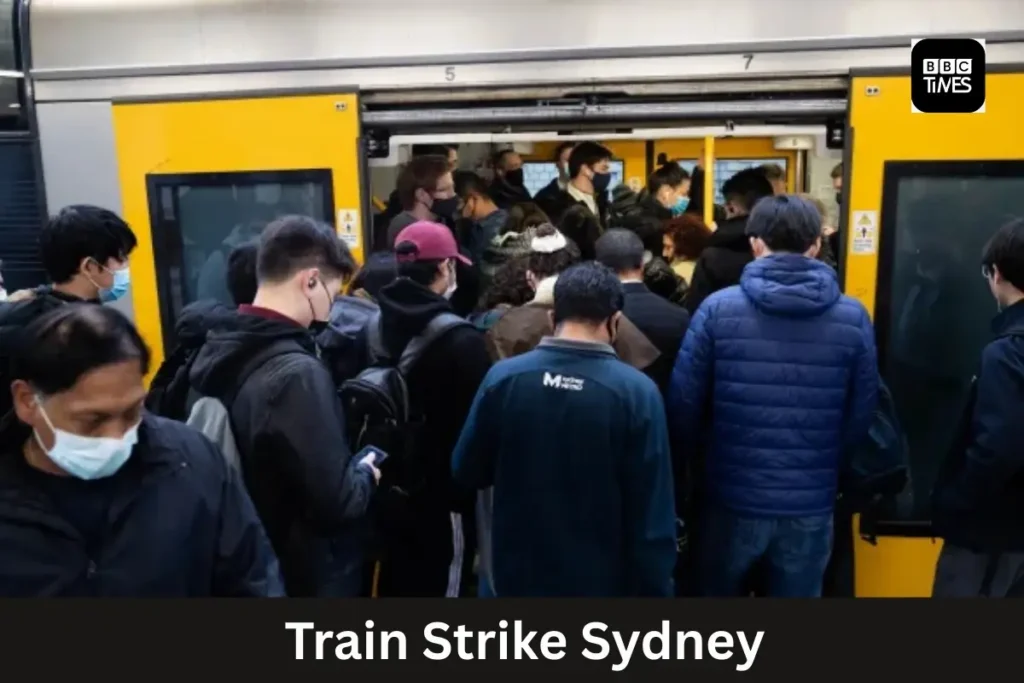
In the future, the Sydney rail strike is still unsolved. Industrial action has been temporarily delayed by the Fair Work Commission’s decision, but if the suspension is reversed, the CEPU’s legal appeal may rekindle the fight. In addition, the NSW Government has been under pressure to find a solution as soon as possible to prevent future commuter inconveniences.
The unions are still calling for equitable compensation that takes into account living expenses and improves working conditions for its members. Even if the administration insists that their offer is fair, there is still a significant divide between the two sides.
The strike by trains Until a long-term solution is discovered, commuters in Sydney may continue to experience disruptions. It is obvious that in order to reach a fair agreement that guarantees Sydney’s train network will continue to run without any further disruptions, all parties will need to make sacrifices.
Conclusion
The strike by trains Sydney has brought attention to the intricate problems with wages and working conditions in the public transportation industry. The continuous interruption has tested passengers’ tolerance since everyday travel has become difficult due to the uncertainty surrounding rail services. Although there is some optimism due to the Fair Work Commission’s interim suspension, the future remains unknown. The future of Sydney’s rail system will probably continue to be shaped in the months to come by legal disputes, union demands, and governmental restrictions.
While both parties strive to find a long-term solution that strikes a compromise between the demands of the workers and the dependability of public transit, commuters in Sydney must continue to be flexible.
FAQs
Is the Sydney train strike still on?
As of mid-2025, industrial action on the Sydney Trains network has been temporarily suspended by the Fair Work Commission until July 1, 2025. However, there is a possibility of further strikes depending on ongoing legal disputes and union actions.
Why are Sydney Trains always striking?
Sydney Trains strikes are primarily driven by pay disputes, working conditions, and staffing levels. Unions often demand higher wages and better work-life balance, while the government seeks to manage budget constraints and public sector wage limits.
How do I find out if my train is affected by strikes?
You can check for live updates on the status of Sydney Trains by visiting the Transport for NSW website or using their mobile app, which provides real-time information on train services and any disruptions due to strikes.
Do Sydney commuters get a 4-month break from rail strikes?
Yes, Fair Work Commission temporarily suspended industrial action until July 1, 2025, allowing commuters some relief from disruptions. However, this is a temporary suspension, and further strikes may resume depending on the outcome of negotiations.
How to check if a train is running or cancelled?
You can check whether your train is running or cancelled by visiting Transport for NSW’s website, using their mobile app, or checking for service updates at train stations. Additionally, social media channels often provide live updates during major disruptions.
Are there any more train strikes planned?
While train strike Sydney actions have been temporarily suspended, there is still uncertainty about future strikes. Union legal challenges could lead to further disruptions, so commuters should stay updated via official transport channels.
How do I know if my train will get cancelled?
You can find out if your train will be cancelled by checking for real-time updates on the Transport for NSW website, through their app, or at station information boards. Service alerts will also notify commuters of cancellations due to strikes or other disruptions.
Do trains still run during a strike?
During a strike, some services may still run, but there are often significant delays, reduced services, or cancellations, especially during peak hours. It’s essential to check for service status updates before heading to the station.